A nurse who is able to practice to the full extent of their licensure and training is said to have full practice authority. Unfortunately, many states have instituted laws and regulations that prevent nurses from carrying out functions they are legally licensed and fully trained to perform. In the case of advanced practice nurses, like nurse practitioners, these regulations usually take the form of unnecessary physician supervision and collaboration requirements.
NNCC understands that nurses provide high quality healthcare that addresses the whole person. For this reason, NNCC is committed to advocating for policies that allow nurses and APRNs to practice to the full extent of their education and training.
With millions of Americans enrolling in health coverage and the nation facing a shortage of primary care providers, policy makers need to institute policies that maximize the potential of all available health care providers. Research shows permitting nurses to exercise full practice authority increases access and lowers costs.
Currently, 27 states and DC allow nurse practitioners to provide healthcare to the full extent of their education and training.

As the only professional nursing organization involved in the Transforming Clinical Practice Initiative (TCPI) we were part of a collective of 10 professional associations charged to assist over 140,000 clinicians in improving how care is delivered by providing technical assistance support for integrating quality and process improvements, and by building on and spreading existing change methodologies, practice transformation tools, published literature, and technical assistance programs.
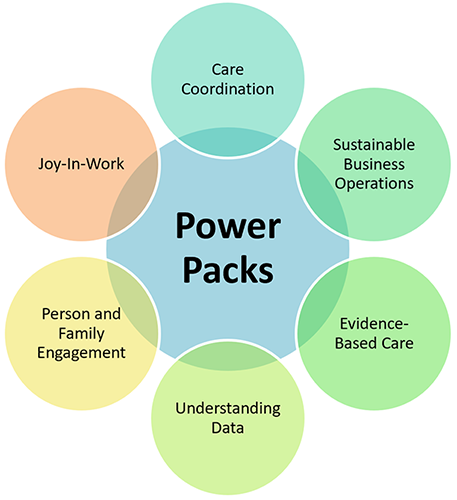
In collaboration with other SANs we developed a number of Power Packs to spread the transformational work undertaken by clinicians and practices nationally.
Each Power Pack presents a specific service delivery challenge and the steps taken by the spotlighted practice to address the challenge. Power Packs provide a set of change tactics and resources from the SANs and other professional associations that clinicians can use to address a similar challenge within their own practices.