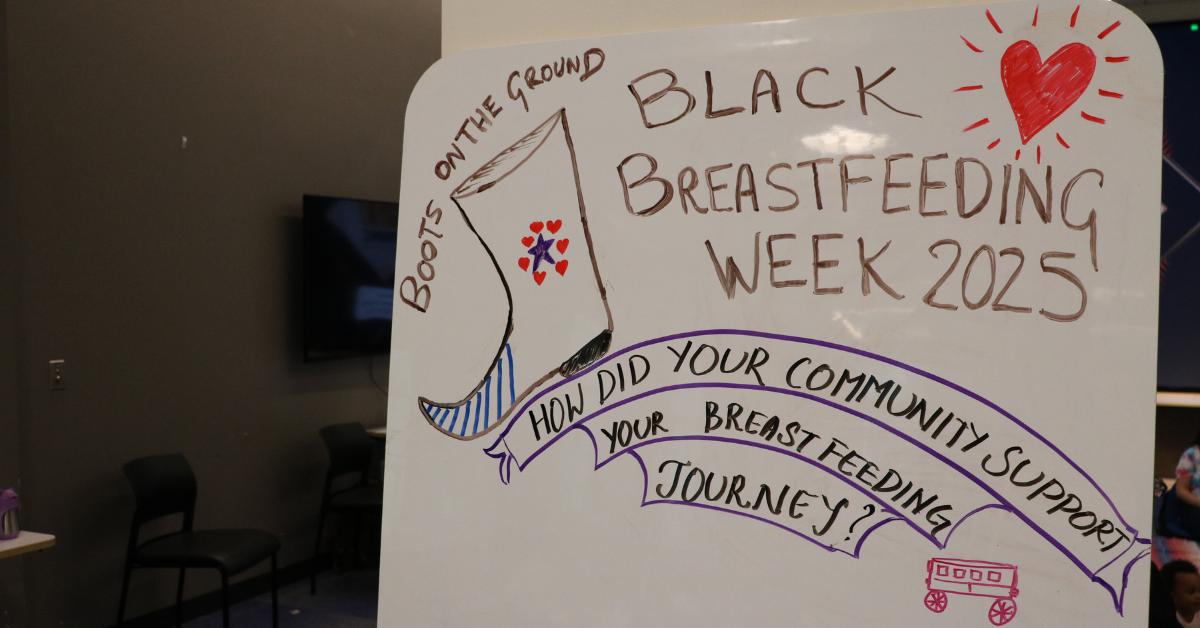
August 25-31 is Black Breastfeeding Week, as a part of August’s World Breastfeeding Month. At LATCH Cafe, we celebrated Black Breastfeeding with this year’s theme, Boots on the Ground: Rooted in Breastfeeding Success, Grounded in Community Support.
Black Breastfeeding Week started in 2012 in an effort to address racial disparities in breastfeeding. In a national survey conducted in 2015, researchers found that 83% of U.S. mothers breastfed, but when broken down by race, only 69% of Black women breastfed, compared to 85% of white women.. While this is true across the United States, the numbers vary based on location. For instance, in Philadelphia, research shows that 87% of white women initiated breastfeeding compared to 80% of Black women,.but by 8 weeks, only 59% of Black parents are breastfeeding, compared to 75% of white parents. The American Academy of Pediatrics recommends that infants receive only breastmilk until 6 months of age, and it is encouraged to keep breastfeeding until the child turns two years old.
There are a few reasons for these disparities, but it is impossible to discuss the reasons without recognizing the legacy of slavery. Generate Health writes that, “for the nearly 250 years that slavery endured in the United States, Black women and birthing people were regularly forced to provide breast milk to the infants of their slave owners.” Irth, a project that addresses health disparities, further explained that, “Black women in slavery were forced to stop nursing their own children to provide breast milk for the children of the slave owner… And since breastfeeding reduces fertility, slave owners forced Black women to stop breastfeeding early so that they could continue breeding, often to the detriment of their infants’ health. This stunted breastfeeding experience created a stunted mothering experience and the commodification of Black women as breeders and feeders.” These practices continued into the Reconstructive Era, and Black women were hired as wet nurses up to the 1940s.
In today’s world, Black women often report systemic barriers in their breastfeeding journey. Some of it involves a lack of family or community support. The negative association of breastfeeding and slavery is still impacting communities, and older generations still view breastfeeding as something they were forced to do against their autonomy, creating both a lack of support and negative cues. Employment is also a large barrier. Black women are over-represented in the service industry and have less access to both maternity leave and lactation support. In Philadelphia, 26% of Black women reported a return to work as their reason for not continuing to breastfeed, versus 10% of white women. Black women also overreport that healthcare professionals did not educate them about breastfeeding. Infant formula marketing targeted Black families and other families of color, and hospitals are twice as likely to provide formula to Black infants as to white infants.
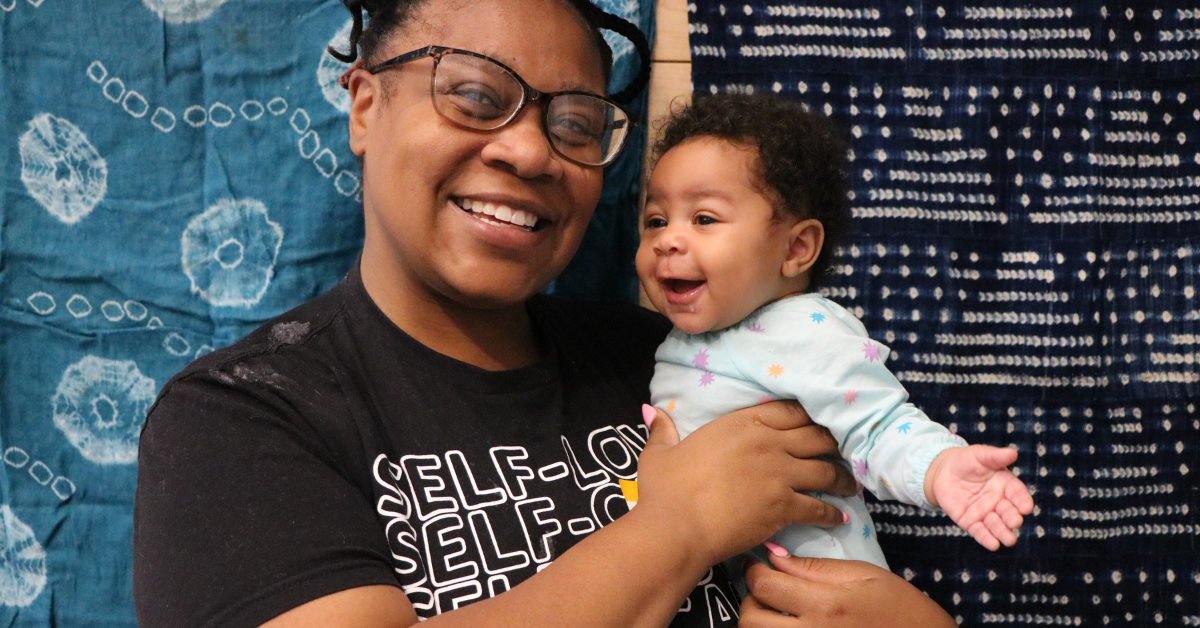
These systemic issues that cause the discrepancies in breastfeeding rates between Black women and their counterparts led to the creation of Black Breastfeeding Week. The LATCH Cafe and NNCC have participated in this week for many years, working with other members of our community to continue to promote and emphasize the importance of breastfeeding in our communities. This year, we spent time at the Cafe talking about how community, like LATCH, supports the breastfeeding journey. We had some great responses:
How did your community, like LATCH, support your breastfeeding journey?
Reminded me to step out to pump
Kept me company when I pumped
Reminded me, your body is enough. You are doing great.
Kept me going, saying don’t quit. Your body is supplying enough.
Provided conversations with other breastfeeding mothers.
Our discussion at LATCH Cafe, in addition to the responses noted above, highlighted how many people currently experience being the first (in generations) to nurse their babies in their family and community, and thus had to serve as the person educating the very people who were their potential support system. We acknowledged how changing the perception of breastfeeding in communities that have been impacted by historical and current systemic racism means continuing to share stories, latch babies even when no one understands the “what” or “why” of it, and trust that slowly this will have ripple effects throughout family and friends and future generations.
LATCH Cafe is so grateful to have our “boots on the ground” in Philadelphia. We love facilitating connections between parents, community supporters, family members, and anyone who has a passion and interest in lactation and feeding babies. Happy Black Breastfeeding Week 2025!

Originally published by the National WIC Association on October 24.
Today, 44 national organizations have signed on to a letter led by the National WIC Association (NWA) urging the White House to provide an additional $300 million in emergency funds for WIC.
This critical funding would sustain program operations through the first two weeks of November and prevent millions of families from losing access to essential WIC services as soon as November 1. Last week, state WIC programs received temporary emergency funds from the White House to stabilize the program through October 31 during the ongoing federal government shutdown. However, that funding is rapidly depleting, and numerous states are projected to exhaust their resources for WIC benefits as early as next month. The letter underscores the severe consequences that women, infants, and young children will face if funding is not secured. The diverse coalition, which includes representatives from the nonprofit, dairy, and retail sectors, emphasizes that this crisis is preventable.
“These disruptions for families can be prevented by releasing additional funding to WIC. With no end in sight for this government shutdown, the White House must act to ensure that families and children do not become casualties of congressional inaction,” the letter states. On behalf of the 44 undersigned national organizations, we urge you to provide additional funds to the Special Supplemental Nutrition Program for Women, Infants, and Children (WIC) during this time of uncertainty. Even with last week’s funds from the White House to stabilize the program, numerous states are projected to exhaust their resources for WIC benefits as early as November 1. We request that the White House provides an additional $300 million in emergency funding to WIC to continue operating in early November and avoid major disruptions on November 1 for women, infants, and young children.
WIC is the nation’s premier preventive public health nutrition program, supporting nearly 7 million low-income mothers and young children who have or are at risk for developing nutrition-related diseases and disorders. WIC benefits are not only critical nutritious food, but families also benefit from nutrition education, breastfeeding education and support, and referrals to medical and social services. While we know WIC has historically remained open for business during government shutdowns, the timing of this shutdown at the beginning of a fiscal year has significantly limited the federal funding options available to states. While we thank the White House for temporarily sustaining WIC for the month of October, it’s imperative that you provide additional funding by early the week of October 27 to avoid major disruptions to WIC beginning on November 1.
Without additional funding, some states may take steps to turn off WIC benefits and issue furlough notices to clinic staff the week of October 27. This means that families could lose access to infant formula, breastfeeding support, nutritious foods, healthcare screenings, and more beginning on November 1. These disruptions for families can be prevented by releasing additional funding to WIC. With no end in sight for this government shutdown, the White House must act to ensure that families and children do not become casualties of congressional inaction. Thank you for your time and for your continued commitment to protecting the health and well-being of families across the nation.
You can read the full article here.

Across the United States, 18.8 million children under age five are growing up in families where parental mental health deeply shapes early development (Children’s Defense Fund, 2023). While exact numbers are unknown, national survey data suggest that nearly one in five parents experiences a mental illness each year (Stambaugh et al., 2017). The emotional well-being of parents and young children is tightly connected—when one struggles, the other is affected. Parenting stress can trigger new mental health conditions or worsen existing ones, especially when families face additional social or economic hardship (U.S. Office of the Surgeon General, 2024).
Children exposed to substance use disorders (SUDs) or intimate partner violence (IPV) face especially high risks (U.S. Office of the Surgeon General, 2024; Lander et al., 2013). About one in four children in the U.S. lives with a parent who has an SUD, increasing their likelihood of developing behavioral or emotional problems (McCabe et al., 2025; Lander et al., 2013). Likewise, children who witness IPV are twice as likely to experience depression, anxiety, or conduct disorders (Kemal et al., 2023). Early childhood—when brain development and neuroplasticity are at their peak—is the most effective time to provide support that can change lifelong outcomes for both parents and children (Buka et al., 2022).
Yet, the systems designed to help often treat parents and children separately, even during the perinatal period. Many parents—especially mothers—face steep barriers to care: lack of childcare, paid leave, transportation, affordable healthcare, and stigma (Agterberg et al., 2020). Social stigma may stem from cultural beliefs, distrust of providers, or fear of judgment, and it can be magnified by challenges such as housing instability, IPV, or substance use (Misra et al., 2021).
On the provider side, access is limited by a nationwide shortage of mental health professionals. As of 2024, over one-third of Americans live in a Mental Health Professional Shortage Area, with rural regions especially underserved (HRSA National Center for Health Workforce Analysis, 2024). Licensing restrictions across states further hinder telehealth expansion. The lack of workforce diversity and ongoing stigma in many communities also deters minority families from seeking help (Misra et al., 2021).
Even when help is found, Medicaid billing rules can make early childhood mental health treatment nearly impossible. Fewer than half of U.S. states allow Medicaid to reimburse dyadic (parent–child) sessions, and only eight states recognize a parent’s mental health condition as justification for treating a young child (Smith et al., 2023). This leaves many families without access and limits providers’ ability to sustain services, despite high enrollment needs (Medicaid.gov, 2025).
To truly support children’s mental health, we must support their parents—through integrated family-based care, equitable reimbursement, and stronger community systems. The science is clear: early intervention works best when parents and children heal together.

According to the American Psychological Association (APA), 87% of American adults agree that mental health disorders are not something to be ashamed of.1 Although Americans have become more accepting of people experiencing mental health struggles, unprecedented levels of stress following the COVID-19 pandemic caused a mental health crisis where all but the very wealthy experienced some form of hardship.2 Over this period, many fathers struggled with anxiety, depression, overwhelming stress, and irritability that were reported but never treated. Despite the positive shift in public perception of mental health issues, many men are still reluctant to receive treatment because negative stereotypes persist.4 The increase in mental health issues during the early 2020s has not yet returned to baseline levels.3 These same fathers are still experiencing high levels of stress, depression, and substance misuse after devastating financial hardship and the loss of loved ones.
Studies show that people who experience mental health issues may have a difficult time managing emotions.5 This can impact the well-being of children during critical stages of development.6 Parenting can be a strong motivator to address your own mental health. If you are concerned about a child’s well-being, having a conversation with that child’s father about mental health can be a step towards better health for both of them.
Before beginning a conversation, figure out what exactly you want to talk about. Angry outbursts are one possible indicator that a person may be experiencing mental health challenges. It is important to understand why that might be happening. Pick an appropriate time and place to have a conversation. During the conversation, it is important to remember that mental health can be a sensitive subject. Approaching the conversation with compassion will help assure he is in a safe and understanding place to share his thoughts and feelings.
One of the most helpful resources that every father should have in his phone is the Crisis Text Line. By texting HOME to 741741, people are connected to a trained counselor who can chat about stressful situations. The goal of the organization is to bring people from a hot moment down to a cool calm.7 This type of de-escalation can be a literal life-saver for people who work in stressful environments. The ability to talk to someone about the situation can help people understand their emotions and the behavior they are seeking to regulate.
Support groups are another great way to improve the mental well-being of fathers. This is especially true among individuals suffering from substance misuse. Social media can be a great place to find support groups for substance misuse and other mental health issues. This can include Facebook, Reddit, or even Discord. New fathers may be interested in groups focusing on the unique challenges that come with adjusting to fatherhood.
Finally, we must all do our part to destigmatize mental health in our communities. 1 in 5 U.S. adults suffer from mental illness.8 Mental health issues are not just something you are born with. In a world filled with stress, hardship, and loss, it is important for us all to remember that anyone can experience a mental health challenge. Many fathers think that getting help makes them weak, but getting mental health treatment makes them stronger, while improving the well-being of their children. A thriving family is one that addresses mental health as part of a whole-person, whole-health strategy.
Crisis Text Line (crisistextline.org) is an organization providing free counselors to anyone who texts HOME to 741741. Conversations are had via text.
NAMI (nami.org) is an organization providing information and resources on a wide range of mental illnesses, including PTSD, bipolar disorder, personality disorders, OCD, depression, and many more.
Psychology Today (psychologytoday.com) is a website that allows users to find therapists in their area. Filters allow users to find therapists who specialize in their area of need (i.e. trauma and PTSD).
The American Association of Marriage and Family Therapy (aamft.org) is an organization that provides information and resources on family centered therapy.
The Substance Abuse and Mental Health Services Administration (samhsa.gov) is an agency within the U.S. Department of Health and Human Services that prioritizes behavioral health issues.
American Psychological Association. (n.d.). Mental health. [https://www.apa.org/news/press/releases/apa-mental-health-report.pdf]. Retrieved from https://www.apa.org/topics/mental-health
Witteveen, D., & Velthorst, E. (2020). Economic hardship and mental health complaints during COVID-19. Proceedings of the National Academy of Sciences, 117(44), 27277–27284. https://doi.org/10.1073/pnas.2009609117
Penninx, B. W. J. H., Benros, M. E., Klein, R. S., & Vinkers, C. H. (2022). How COVID-19 shaped mental health: from infection to pandemic effects. Nature Medicine, 28(10), 2027–2037. https://doi.org/10.1038/s41591-022-02028-2
Norman, N. (2023, September). The Changing View of Men on Mental Health. Psychology Today. https://www.psychologytoday.com/us/blog/mens-mental-health-matters/202309/the-changing-view-of-men-on-mental-health
Gross, J. J., & Gross, R. D. (2011). The impaired regulation of emotions model: A model for depression and anxiety. Psychological Inquiry, 22(3), 161–174.
Scarlett, H., Moirangthem, S., & van der Waerden, J. (2023). The impact of paternal mental illness on child development: an umbrella review of systematic reviews and meta-analyses. European child & adolescent psychiatry, 10.1007/s00787-023-02261-1. Advance online publication. https://doi.org/10.1007/s00787-023-02261-1
Crisis Text Line. (n.d.). Crisis Text Line: Spread the Word. Retrieved from https://www.crisistextline.org/spread-the-word/
National Alliance on Mental Illness (NAMI). (2023, February). Mental health by the numbers. https://www.nami.org/