In 2011, growing federal support for nurse-managed clinics helped accelerate NNCC's workforce development efforts and innovation in health data and technology.
The Affordable Care Act (ACA) changed the healthcare landscape, and NNCC advocated for the inclusion of advanced practice nursing and nurse-managed health centers throughout this period. Through the ACA, nurse-led clinics were federally recognized as a healthcare delivery model. The law created the Nurse-Managed Health Clinic grant program, which added section 330A-1 to Title III of the Public Health Service Act. The statute provides that the term "nurse-managed health clinic" means "a nurse-practice arrangement, managed by advanced practice nurses, that provides primary care or wellness services to underserved or vulnerable populations and that is associated with a school, college, university or department of nursing, federally qualified health center, or independent nonprofit health or social services agency." (42 U.S.C. § 254c–1a(a)(2)). Through Title III, the ACA established a NMHC grant program, which wasn't ultimately funded but established a mechanism for recognizing NMHCs, a practice continued by the Health Resources and Services Administration (HRSA).
To that end, HRSA regularly partnered with NNCC during this period to elevate the importance of nurse-led models of care. Modest changes like adding a "are you a nurse-managed health clinic" to the mandatory FQHC reporting system reflected the subtle influence of NNCC in federal policy. As health care reform continued to develop, NNCC was often behind the scenes working to ensure that nurse-led practices could benefit from reforms in health information technology, value-based care, and the rapid expansion of the community health center program.
Programs like NNCC’s national training and technical assistance programs (2008-2026) allowed NNCC to shape health center priorities like patient-centered care, interdisciplinary care teams, and social determinants of health. As part of a robust network for technical assistance partners, NNCC collaboratively developed resources that continue to support health centers today.
Likewise, nurse-led clinics were early adopters of health information technology, leveraging incentive programs through the Centers for Medicaid and Medicare Services (CMS) and federal stimulus efforts of that time. Health center leadership across NNCC had long been interested in nurse-led electronic medical records and the potential of building a data warehouse that could capture the outcomes of nurse-led practices. This work became the foundation for PHMC and NNCC to develop the Keys to Quality HCCN (K2Q HCCN) to help nurse-managed health centers adopt and excel at the use of EMR. Funded in 2012, Keys to Quality continues to support community health centers across the country that benefit from customized technical assistance to reach their health IT goals and specializes in patient engagement, care team wellbeing, and social determinants of health.

NNCC and the Future of Nursing
In 2010, the Institute of Medicine, now the National Academies of Medicine, published the Future of Nursing: Leading Change, Advancing Health. The report recognized the importance of nurse-led practices, even highlighting Philadelphia health centers as national examples. From the Future of Nursing report came the Campaign for Action, a joint initiative of the Robert Wood Johnson Foundation and AARP to implement the recommendations that were outlined in the Future of Nursing report. The recommendations focused on nursing leadership, workforce development, cultural competence, data, and policies that remove barriers to care. Further, the Campaign for Action called for all states to establish Action Coalitions - cross sector coalitions that could align diverse healthcare stakeholders around healthcare transformation through nursing intervention and innovation.
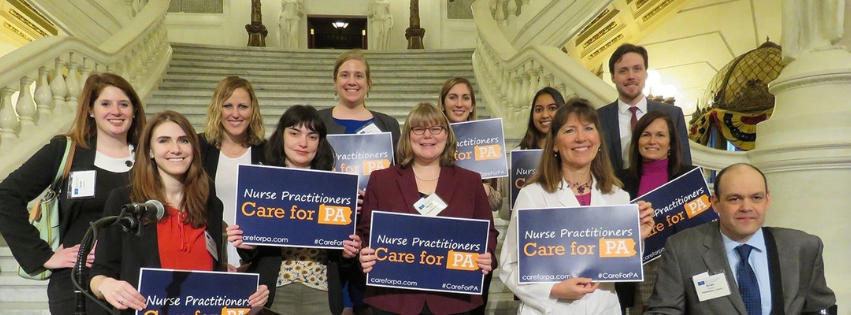
A core recommendation of the Future of Nursing report called for all nurses to practice to the full extent of their education and training. As nurse-led clinics depend on advanced practice nurses as providers, NNCC has long advocated for full practice authority and removing barriers that have proven unnecessary to ensure quality of care and instead restrict access to care. NNCC has been particularly active in Pennsylvania’s efforts to modernize nursing practice for nurse practitioners, again highlighting the importance of a robust safety net of providers that can advance community health through holistic models of care.

The state of Pennsylvania's Nursing Workforce Coalition
At the state level, NNCC engaged in Pennsylvania’s work as a founding member and the fiscal intermediary for the Pennsylvania Action Coalition (now the PA Nursing Workforce Coalition). Originally housed at the Pennsylvania State Nurses Association (PSNA), the PA-AC moved to NNCC in 2015 and continues to diversify its membership to reflect the vast array of nursing stakeholders in Pennsylvania. As a neutral convener and strong advocate for advanced practice nursing, a core recommendation from the Future of Nursing report, NNCC was able to drive the collective impact of these stakeholders by creating spaces for collaboration, aligning around data as a priority, and supporting nursing workforce pathways.
Through the PA-NWC, Pennsylvania was able to establish a statewide residency collaborative for graduate nurses, offer professional development and continuing education that aligned with stakeholder priorities, and develop mentorship programs like PA-AC Cohort of Exchanged Learning (PA-ACCEL). As the designated state nursing workforce center for Pennsylvania and actively engaged in the National Forum of State Nursing Workforce Centers, what started with the Campaign for Action movement (sunsetted in 2025) continues as a program at NNCC and a collective effort to advance nursing strategies to drive improvements in patient care and community health. Learn more about the PA-NWC here.
Around this time, in 2016, the National Nursing Centers Consortium became the National Nurse-Led Care Consortium, reflecting its broader commitment to advancing nurse-led care. Also in 2016, an innovative new care model was introduced to our home visitors. Learn about it here.
Contribute to the next 30 years of NNCC history by donating to the 50/50 raffle here.