Earlier this week, NNCC's Executive Director Sarah Hexem Hubbard joined patients and advocates in the Pennsylvania State Capitol to speak in support of legislation that would increase access to health care delivered by Nurse Practitioners.
Hubbard represented the National Nurse-Led Care Consortium and Public Health Management Corporation's support for the Care for PA Coalition. The Care for PA Coalition has broad reach across the state of Pennsylvania, across sectors, across disciplines, and across party lines. Whether driven by respect for a patient's freedom to select the provider they trust, interest in implementing evidence-based public health policy, or championing the cause of consumers, the coalition is committed to the success of full practice authority legislation in Pennsylvania.
In Pennsylvania and the other 23 states who have yet to modernize advanced practice nursing regulations. Full practice authority is well past due.
Learn more about Full Practice Authority here.

It’s official: 2023 was the hottest year on record. Less than two weeks after the start of the new year, scientists at NASA confirmed that global temperatures were around 2.1 degrees Fahrenheit above baseline, and there’s every reason to believe 2024 will be even worse.
As healthcare professionals, we don’t need to tell you the existential threat to humanity and human health that climate change poses. Climate-related disasters are now everyday news – melting glaciers, extreme heat, devastating wildfires – and it’s no surprise that it can feel overwhelming, but it’s essential that our healthcare system prepare for climate change emergencies.
Here are some of the reasons why climate change emergency preparedness is essential for your health center:
Federally Qualified Health Centers (FQHCs) serve 30.5 million people in the U.S. – that’s close to 10% of the population, including 6.1 million people in public housing. Residents of public housing and patients to FQHCs are disproportionately: low income, elderly, children, and people with disabilities. Underserved and marginalized communities are the most vulnerable to climate change and disasters. Health centers play an essential role in ensuring health equity.
Climate change and rising heat don’t just cause extreme disasters, they impact people’s daily lives and health as well. Heat waves increase issues with asthma, kidney injuries, risk of stroke, adverse pregnancy outcomes, worsened sleep patterns, stress mental health, and aggravate underlying cardiovascular and respiratory conditions.
It’s no secret that climate change is increasing extreme weather. In addition to the health impact on the patients that you serve - extreme weather also threatens vital health center infrastructure.
In a recent webinar, Gianna Van Winkle, Director of Emergency Management Programs for The Florida Association of Community Health Centers, outlined some ways that health centers in her state are adapting to climate change by increasing their resilience to flooding - an increasingly common risk in many parts of the country. Flooding resilience and prevention improvements include: installing renewable energy systems and backup generators, elevating structures and critical equipment, flood-proofing electrical and data infrastructure, and much more.
Always check our Upcoming Webinars page for the latest webinars. It’s your opportunity to learn, grow professionally, and earn free CNE credits.
More Resources:

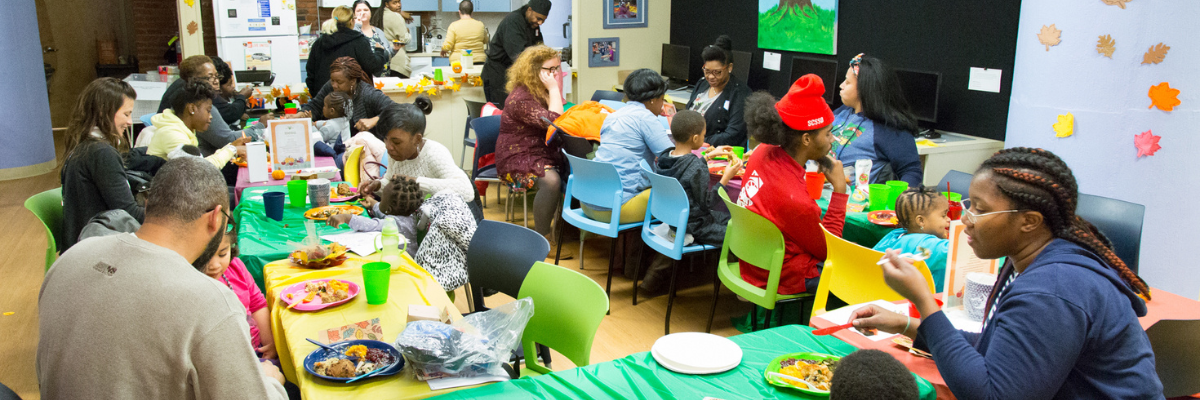
Each year our public health nurses host an annual end of the year meal for their clients. Started in 2014, this tradition celebrates the warmth and values of the season. It’s an opportunity to gather with families for a meal, look back at the year, take a family portrait, and create memories. We spoke with Lizz Tooher, Senior Director of Child Health and Education, who began her career at NNCC as a nurse with Mabel Morris over 11 years ago. Read the interview below:
Can you tell us about the start of the End-of-Year Bash?
Of course. Actually, this is the first time we called it an End-of-Year Bash. Historically it's been an end of year meal, but as our team has grown and we have an event coordinator, the event grew alongside it. This specific event started two years after Mabel Morris began. We already held monthly events called Group Connections, created to build community and reduce isolation. But we wanted something special for the end of the year, to celebrate the warmth and value of the holiday spirit. So for our first End-of-Year Bash we planned an evening meal for the families.
The event started as preparing a meal together. The families and nurses all came together to make a large meal, then adults sat together at the large table to eat as the kids and nurses shared their meals over some activities. And it was successful.

How did the meal grow to be the End-of-Year Bash?
Eventually, as our program and budget grew, we brought on more nurses and families. The event became too large to have the input of all the families to cook, but we didn’t want to create an entirely new event, so we shifted gears. We learned from the feedback of our families and our own experiences how to best accommodate families during the End-of-Year Bash.
We incorporated music and dancing, story time and family photos. Our families started bringing friends and extended family to participate, involving more of their community than they are able to do during home visits. And at the end, the families leave with a goodie bag of snacks, a book, and something commemorative.
This transition reflected in the Bash - a lot has changed. Initially we had a strict structure during the event, but then we learned that it needed to be an open house and be more flexible. We learned from what we were seeing - building expertise over time. Like everything else in our work, it's long term with families. You get to know your work better and the events better. It’s much less formal now.
How does this Bash illustrate how nurses are treating the whole person when it comes to their work with their families. For us, the care starts before the families arrive to the event. If you go to the doctor, the care starts in the exam room, but for us we start before with the emphasis of providing rides and food. We understood that barriers existed for these families that impacted their attendance. Our care begins before the event does - we provide free transportation, free food at any time during the event, and a safe space for families to enjoy the festive season. And, as mentioned before, a huge part of our model is about building community and reducing isolation. This event brings families together. Folks come when they can, and we want to meet them where they're at. Why is this End-of-Year Bash so meaningful to both nurses and their families? These events bring moments out for families - they spend time with their nurses and realize they aren't ready to graduate from the program. These families and nurses care so much about the relationships they've spent years forming. Learn more about our public health nursing programs. 
LATEST NEWS
STAY CONNECTED TO NURSE-LED CARE
The National Nurse-Led Care Consortium is proud to announce that it is one of 80 organizations to receive a Public Health AmeriCorps program grant to support the recruitment, training, and development of a new generation of public health leaders.
This new partnership with AmeriCorps, the federal agency for national service and volunteerism, and the Centers for Disease Control and Prevention will help meet public health needs of local communities by providing surge capacity and support while also creating pathways to public health-related careers. Public Health AmeriCorps programs will support health equity, mental health and substance use disorders, COVID-19 recovery, and will increase access to services, especially in underserved communities.
NNCC has been awarded funding to host a Public Health AmeriCorps program unique to its mission. The AmeriCorps Public Health Nursing Fellowship will provide undergraduate nursing students with community based primary care and public health clinical experiences serving vulnerable communities. This prestigious fellowship will enhance students’ competencies to screen patients for structural determinants of health, refer individuals to social and healthcare services, provide healthcare education to high-risk patients, and expand capacity within primary care and public health organizations.
During the fellowship, students will receive advanced training and professional development opportunities along with a living stipend. Upon the completion of the program, students will also receive an education award which can be used for current or future school expenses.
Are you a nursing student interested in participating in the AmeriCorps Public Health Nursing Fellowship? Fill out our Nursing Student Interest Form and see further details here.
If you are interested in hosting an AmeriCorps member at your organization, contact Christine Simon, Director of Workforce Development, at .
Click here to learn more about NNCC's AmeriCorps Programs
Click here to apply for open AmeriCorps State positions