This story originally appeared on 34th Street.
Nurses rank as the No.1–most–trusted profession consistently from year to year—above doctors, grade school teachers, and even members of the clergy. The work they do is multifaceted. It’s more than just delivering medications and performing assessments—it’s wholeheartedly devoting themselves to the care of their patients and the advancement of the profession. The job title of a nurse is hard to define because nurses are never just a nurse; they are therapists, friends, leaders, experts, and voices. Despite being a complex profession with a wealth of clinical knowledge and experience, nurses’ representation in the public space is limited.
“We recognize that gender bias exists in the media and that power hierarchy exists in health care institutions,” Barbara Glickstein says. Glickstein is a nursing media strategist with an extensive background in reporting and writing. She produces for health and health care policy media group HealthCetera, hosting blogs and podcasts. Additionally, Glickstein is an adjunct lecturer at the Hunter–Bellevue School of Nursing at the City University of New York and the founder of Barbara Glickstein Strategies, a media training company for healthcare professionals.
Alongside Glickstein, Diana Mason is a nursing media expert who is passionate about the training and amplification of nurse voices. Diana Mason is the senior policy service professor for the Center of Health Policy and Media Engagement at the George Washington University School of Nursing. She is the former editor–in–chief of the American Journal of Nursing and co-producer of a weekly healthcare radio program that has aired since 1985.
In 2018, Glickstein and Mason led the revision of the Woodhull study; the original Woodhull study, which was conducted 20 years ago, analyzed thousands of articles published in United States media. The study found that less than 1% of the news magazines and industry publications examined mentioned nurses. Specifically in health news articles, nurses were referenced in under 4% of articles.
The 2018 revisit of the Woodhull study led to several critical findings about barriers, biases, and poor representation of nurses in the media. From 1997 to 2017, the use of nurses as sources in health news dropped from 4% to 2%. “Our study showed that communication departments in academic medical centers will refer to a physician as an expert source even when a reporter asks for a nurse expert,” Glickstein says. This is an astonishing takeaway, given that registered nurses make up one out of every five healthcare workers, the largest group in the industry. There is a continued invisibility of nurses in health news media.
Mason and Glickstein cite specific examples of experiences during the Woodhull study that caused them to continue to push for nursing representation in the media. When speaking to journalists about interviewing nurses, a healthcare reporter says to Mason: “I don’t cover nursing. I cover the business of health care. So why would I interview a nurse?” Mason replies, “You interview the nurse because the chief nurse of the hospital probably oversees 70% of that hospital’s budget.”
Glickstein recalls a similar story from her time working on the study. She was interviewing a reporter who covered cardiac research and used a senior cardiac nurse to explain new studies to her. When the reporter cited her sources, she wasn’t allowed to cite the nurse. “The nurse does not have permission from the chairman of the department to be quoted, he is the only one in the department allowed to be quoted,” the reporter tells Glickstein. The chairman was a male physician.
“When you ask a mother who brought her child to the clinic late you find out that it takes two hours by bus to get there and the bus only runs on a limited schedule,” Glickstein says. Nurses are trained to think about the big picture—they consider all the social determinants of health affecting a patient’s life. When a patient is not adhering to their care plan, nurses ask why. “Nurses see the world through a lens that is different from some others; that connection between the patient's story and policy is powerful,” Mason says. Nurses aren’t writing for themselves. They are writing for their patients, their profession, and for the progress of health care policy.
With Penn’s School of Nursing being the number one nursing school in the world nine years in a row, there is no doubt the students and faculty have distinct voices and experiences that should be heard. “It’s about nurses being able to control the narrative of what they do,” Marion Leary, the director of innovation at the Nursing School, says. She writes for multiple publications, has two podcasts, and consistently works with nurses eager to share their stories. “There’s a lot of things that nurses do that are misrepresented or not portrayed at all when you're watching television shows or when there is a health care crisis, and nurses aren't even considered for interviews or as experts in certain areas,” Leary says.
In the Philadelphia community and on Penn’s campus, nurses are taking steps toward the forefront of health media stories. Ali Gorman, a former U.S. Navy nurse and 6abc News health and medical reporter, is an advocate for nurse voices in health news. Currently, Gorman works for BiotechTV, reporting on the biotech scene in the Philly area. “There is an inherent trust people feel when they see a nurse in the news. Nurses are genuine and truly want the best for everyone.” Gorman says. “You’re not putting the politics into it. You’re not an influencer. You’re not getting paid to promote something. You’re just giving people what they need in an unbiased fashion, in an accurate way.”
For Gorman, the COVID–19 pandemic brought some silver linings for nurses. Philadelphians stood on their streets at 5 p.m., clapping and cheering for healthcare workers as their 12–hour shifts ended. Gorman and the nursing community were grateful for the public’s newfound appreciation for what they do every day. “The general public was more understanding of public health and how these things matter and why they matter,” Gorman says. However, despite the influx of articles and social media posts supporting our frontline healthcare workers during the pandemic, nurses remained silenced in the media.
Since 2020, nurses’ voices are needed more than ever. “Nurses are in so many different spaces,” Leary says. “We’re at the bedside, we’re in the community, we’re in schools, we’re in boardrooms and startups, in the military, Congress, all these places, which gives us a breadth and depth of knowledge that is unparalleled.” A nurse’s diverse perspective can encourage innovative approaches to health policy change, public health improvements, and even the fine arts.
”Two years ago, I actually partnered with a theater company and we created two original plays based on frontline health workers’ experiences,” Leary says. This idea not only shows the impactful stories of nurses through a unique art medium, but it also positively contributes to the performing arts space. This wouldn’t have been made possible without the courage and creativity of nurses who were determined to tell their stories through theater. Leary believes that all nurses deserve spaces to share their experiences on the floor—even if it feels untraditional.
Disrupting bias and misinformation about the nursing profession starts with nurses themselves speaking up about what they do. According to a 2023 holistic review, 40% of examined studies saw an overwhelming amount of negative media portrayals of nurses. 20% found the images to be more negative than positive. Leary blames nursing education for failing to teach nurses how to be active with their voices. Additionally, nursing programs fail to bring nurses into the spotlight. “We need to prepare nurses when going through nursing school, with the confidence, ability, skills, and resources to be prepared to speak to the media,” Leary says. Currently, there are no courses in the plan of study for the Nursing School’s bachelor’s degree in nursing program that educate nurses on how they can use their voice in the media.
Gorman similarly believes there are barriers to representation created by hospital administration. She says, “So many times I would walk in somewhere and I would be like, ‘Can I talk to the nurse or the nurse practitioner?’ And they—the administration—would say, ‘No, no, no, no. You can talk to the doctor.’” Gorman encounters this commonly in her work as a journalist. “Hospitals don’t realize that nurses are the ones that are imparting information every single day,” she says. “Maybe it’s one–on–one and not to a bigger audience. But they’re doing it.”
For years, nurses have tried to harness the power of the media to create change at the bedside and in practice. This is difficult to achieve, as nurses have faced significant obstacles to seeing equitable, correct, and steady nurse voices in the public media space. Addressing bias and misunderstanding of the nursing profession starts with educating nurses to step up and use their voices. We must not forget to uplift nurses in clinical environments and the paths they pursue to advance public health. It’s time the media challenges their perception of nurses by embracing them—not pushing them away. ”Let’s advance the conversation from why should nurses be sources in the media to focusing on the fact that our voices matter,” Glickstein says.

Written by nurse home visitors Becca Lipstein and Elisheva Khalfin Elbaz
During a recent home visit, while bouncing her 6-month-old son on her knee, one of our clients talked about having a second baby in the next two years. Interwoven with her hope to grow her family was an acute and persistent fear. Although she had physically recovered from her first delivery, she still carried the emotional scars of an urgent trip to the hospital with spiking hypertension, followed by an emergency, unexpected c-section. The question of whether she would survive a similar situation, a second time, was not just a hypothetical or hyperbole; the life-or-death stakes of pregnancy, particularly for Black women, are borne out by data. While each parent’s experience is unique, such conversations are not uncommon in our role as nurse home visitors in Philadelphia, and they arise frequently with Black women, who face disproportionate risks during childbirth.
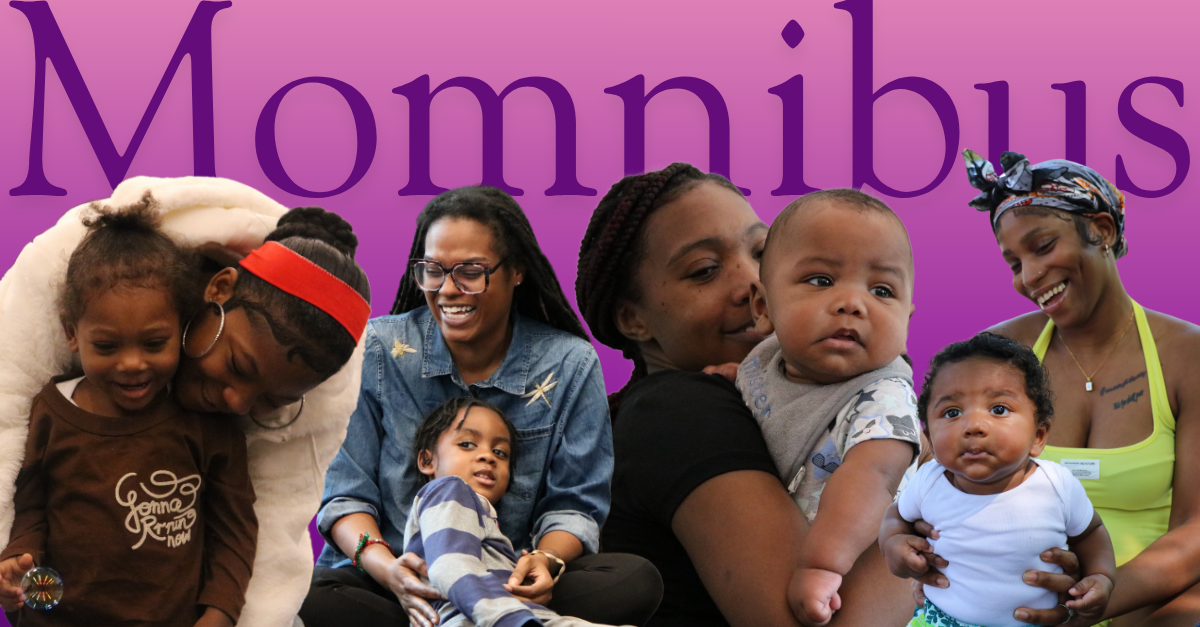
These fears–-and the alarming reality that gives rise to them—underscore the urgent need for systemic change in maternal healthcare. To address striking disparities in Black maternal mortality, Pennsylvania legislators have introduced a groundbreaking legislative package known as the "Momnibus." This suite of eight bills aims to transform maternity care in the state. Modeled after the federal Momnibus package, the state version was introduced in March 2024 by Representatives Morgan Cephas, Gina Curry, and La’Tasha Mayes, along with other members of the PA Black Maternal Health Caucus. If passed, these bills:
Extend Medicaid coverage for doula care
Require Medicaid to cover at-home blood pressure monitors
Enhance access to mental healthcare services
Mandate implicit bias training for healthcare providers
Identify and address ‘healthcare deserts’ with targeted resources
Distribute essential postpartum supplies like diapers and recovery items
As public health nurses, we view these bills as crucial for addressing both a public health crisis and a fundamental issue of justice. In the U.S., Black women are three times more likely to die from pregnancy-related causes compared to white women. In Pennsylvania, the disparity is even more pronounced: in 2021, the maternal mortality rate for non-Hispanic Black women was 2.6 times higher than that for non-Hispanic White women. Each statistic here represents an incalculable loss—the death of a parent, partner, colleague, or friend—that reverberates throughout communities and across generations.
These tragedies are not inevitable; many maternal deaths are preventable. While obstetrical complications, like hemorrhage, receive frequent attention, data show that mental health conditions are leading drivers of maternal mortality in PA. As Nurse-Family Partnership nurse home visitors, we routinely screen for depression and anxiety during home visits. Early detection and referral to therapy or support services can make a significant difference. The Perinatal and Postpartum Education Act, part of the Momnibus package, aims to expand mental health education in OB offices and public settings, potentially reaching more at-risk parents. The bills were put forth during the 2023-2024 legislative session, resulting in:
Certain Momnibus bills passed both the PA House of Representatives and the Senate. This includes:
Enhancing mental health care for pregnant and postpartum patients (HB 2127)
Extend Medicaid coverage to doula services in the state (HB 1608)
Some bills passed the PA House of Representatives with bipartisan support and were awaiting a vote in the state Senate:
Require insurance coverage for blood pressure monitors for home (HB 2138)
Expand Medicaid coverage of blood pressure monitors (HB 2097)
Providing new mothers and parents with maternal and newborn supply kits and connecting them to additional support programs (HB 2137)
No action was taken on the following bills:
Investing in maternal healthcare deserts (HB 2136)
Incorporating implicit bias training for healthcare providers (HB 2178)
As public health nurse home visitors working alongside families across Philadelphia, we know that passing the Momnibus legislation would save lives. Allowing people to easily monitor their blood pressure at home, supplying expecting parents with newborn essentials, and increasing access to hands-on support during and after birth will support healthy pregnancy, birth, and postpartum. Pennsylvania has the opportunity to lead the nation in maternal health. The Pennsylvania House and Senate returns to session on January 27, 2025.
For more information on the PA Momnibus bills, visit the PA Black Maternal Health Caucus website.
Citations:
Reduce Black Maternal Mortality
2024 Pennsylvania Maternal Mortality Review Annual Report
Important Research links:
Easy Visual Summary of the Momnibus bills
PA Black Maternal Health Toolkit
2024 Maternal Mortality Review Committee Report
The Actual HB 2127 Bill about Mental Health

This story originally appeared in the Philadelphia Inquirer. Written by Anna Fry, nurse home visitor at Philadelphia Nurse-Family Partnership and a clinical nurse educator at the National Nurse-Led Care Consortium.
The House’s "big, beautiful bill" requires states to pay for a portion of food benefit costs — changes that would oblige Pennsylvania to pay more than $1 billion to cover the cost of SNAP benefits.
As the House of Representatives voted to take away health care and food assistance from millions of people in every corner of the United States, I immediately thought of one of my patients, a single mom of twins.
One of her daughters has autism and behavioral challenges. The mother works full time, but often gets a part-time paycheck — the logistics of having to often pick up her daughter from childcare due to her behavioral challenges sometimes interferes with her scheduled work hours.
She qualifies for SNAP, but her changing work hours mean that she has to frequently update her paperwork to adjust the amount she receives.
Her challenging schedule as a working mom means that she has a difficult time finding daytime hours to go to the welfare office to turn in her paperwork.
Her daughter screams whenever she has to ride the bus because the environment is overstimulating for her, and so she arranges rides with friends and takes taxis to manage the two children.
Changes to her SNAP would present a new level of challenge for her family, already struggling with what she has to do to retain her current level of benefits.
Another of my patients at the Philadelphia Nurse-Family Partnership — an evidence-based nurse home visiting program that empowers first-time moms to successfully change their lives and the lives of their children — relied on Medicaid, which covered prenatal testing, medications, and newborn care.
When she was pregnant, she didn’t have health insurance. She was trying to get it through her job, but she was worried she wouldn’t get coverage before her son was born. That’s when she talked to me, her Philadelphia Nurse-Family Partnership nurse, and I connected her with free legal help through the Family Advocacy and Integrated Resources project. One of the project’s lawyers helped her get Medicaid. She couldn’t go to the doctor until she had her enrollment card.
When she went, she found out she was sick with a liver disorder, and her baby was not growing normally. She was immediately sent to the hospital, where she was put on medication to treat her condition, and they checked on her baby’s health. He was born early, and he needed to stay in the neonatal intensive care unit, but he is healthy now.
If she didn’t have Medicaid, she doesn’t know what would have happened to her son. Without the intervention during her pregnancy, she may have lost the pregnancy and suffered health ramifications for herself, as well.
From new moms to lifelong home health aides and doctors who provide care at rural hospitals, people from all walks of life have been righteously horrified to think about what would happen if Congress kicked millions of people off their health insurance.
Everyone who is rightfully concerned about the loss of health insurance must also raise their voices to protect the Supplemental Nutrition Assistance Program (SNAP), which keeps families healthy and strong. The historic cuts that Congress has proposed will endanger that program, too.
Between 2015 and 2019, SNAP lifted 109,000 kids in Pennsylvania out of poverty. Research illustrating the health impact of SNAP shows just how much food truly is medicine. Early access to SNAP during pregnancy and early childhood improves birth outcomes and lifelong health.
Infants and children in families participating in SNAP are more likely to see a doctor for periodic checkups. Children who receive SNAP do better in school and are more likely to graduate from high school.
For nearly 50 years, SNAP food benefits have been 100% federally funded. This national commitment has ensured that eligible families can access adequate nutrition, no matter where they live.
However, the House’s reconciliation bill would require states to pay for a portion of food benefit costs for the first time. Radical changes to SNAP would oblige Pennsylvania to pay more than $1 billion to cover the cost of SNAP food benefits.
It would also greatly expand SNAP’s harsh work requirements and compel most adults to prove they are still eligible every six months instead of once a year to keep their Medicaid. For the first time, parents of children over the age of 7 will need to prove that they are working 20 hours or more per week to keep their SNAP.
As a result, more than 400,000 parents, children, and older adults would be at risk of going hungry if they are not able to satisfy work requirements because they are taking care of sick children, or are unable to find work through no fault of their own.
And to make matters worse, many people would not be able to reach County Assistance Offices for help with their renewals. The proposed bill would cut administrative funding and add layers of new work requirement paperwork to offices already unable to recruit and retain staff due to low pay. That means those in need of help would face an underfunded and dysfunctional system rife with unanswered calls and backlogs in processing papers.
All of these issues will cause all eligible people, including seniors and people with disabilities, to lose access to food, even if they are supposed to be exempt from harsh work requirements. Cuts to SNAP will create preventable crises that touch every area of our patients’ lives.
Congress must reject cuts to this essential program, so families don’t go hungry.

The Emergency Preparedness Project was sunsetted after the project period ended. This page served as the program page.
This project aimed to identify and bolster the public health preparedness of community health centers, including Federally Qualified Health Centers (FQHCs), nurse-managed health centers, and retail-based health care centers.
We assessed the landscape of training resources available to these centers and clinics, identified preparedness best practices, built useful tools, and provided training and technical assistance. Our educational efforts included presenting webinars and designing publications with the goal of better enabling health clinics and centers to be able to respond to a pandemic or other public health emergency.
The National Nurse-Led Care Consortium partnered with the Public Health Management Corporation’s Research and Evaluation Group and the Convenient Care Association for the public health preparedness project. This project was funded by the U.S. Centers for Disease Control and Prevention and the National Network of Public Health Institutes.
Access Our Emergency Preparedness Resources