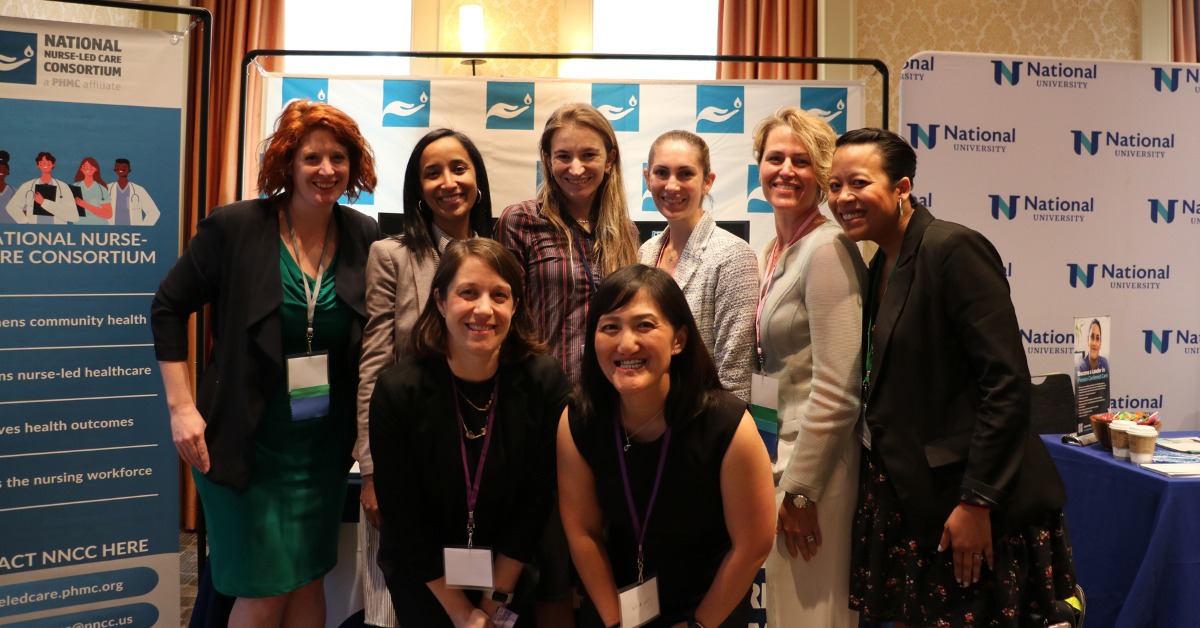
NNCC was a proud co-sponsor of the National Forum of State Nursing Workforce Centers Conference, held June 2–4, 2025, in Philadelphia, Pennsylvania. This annual gathering brings together leaders from across the nursing workforce sector to explore critical topics such as nursing education and policy, workforce data and research, and care delivery models. These collaborations can support the development of strategies to build a more diverse workforce and address ongoing shortages and critical gaps in nursing.
To open the conference, NNCC Executive Director Sarah Hexem Hubbard gave a keynote address that shared more about NNCC’s role in advancing nursing workforce development and public health outcomes in Philadelphia. During the conference's poster session, NNCC’s Workforce Development team presented a poster on the AmeriCorps Public Health Nursing Fellowship, which is designed to promote the importance of public health nursing and encourages nursing careers in community settings. The PA Nursing Workforce Coalition (PA-NWC) also presented a poster on the PA-ACCEL mentorship program, which supports diversity in the nursing workforce by providing underrepresented students with intentional, structured mentorship throughout their academic journey. NNCC’s Deputy Executive Director Erin Graham participated in a panel focused on emerging trends and shifts in the nursing workforce. Amy Ricords, Director of Nursing Professional Advancement, also joined a panel discussion centered on strengthening the pipeline of well-prepared clinical nursing preceptors and faculty.
Thank you to all the NNCC staff, the National Forum of State Nursing Workforce Centers, the nursing workforce centers nationwide, and the dedicated leaders in the field for such an insightful and energizing conference, and for helping to shape the future of nursing!

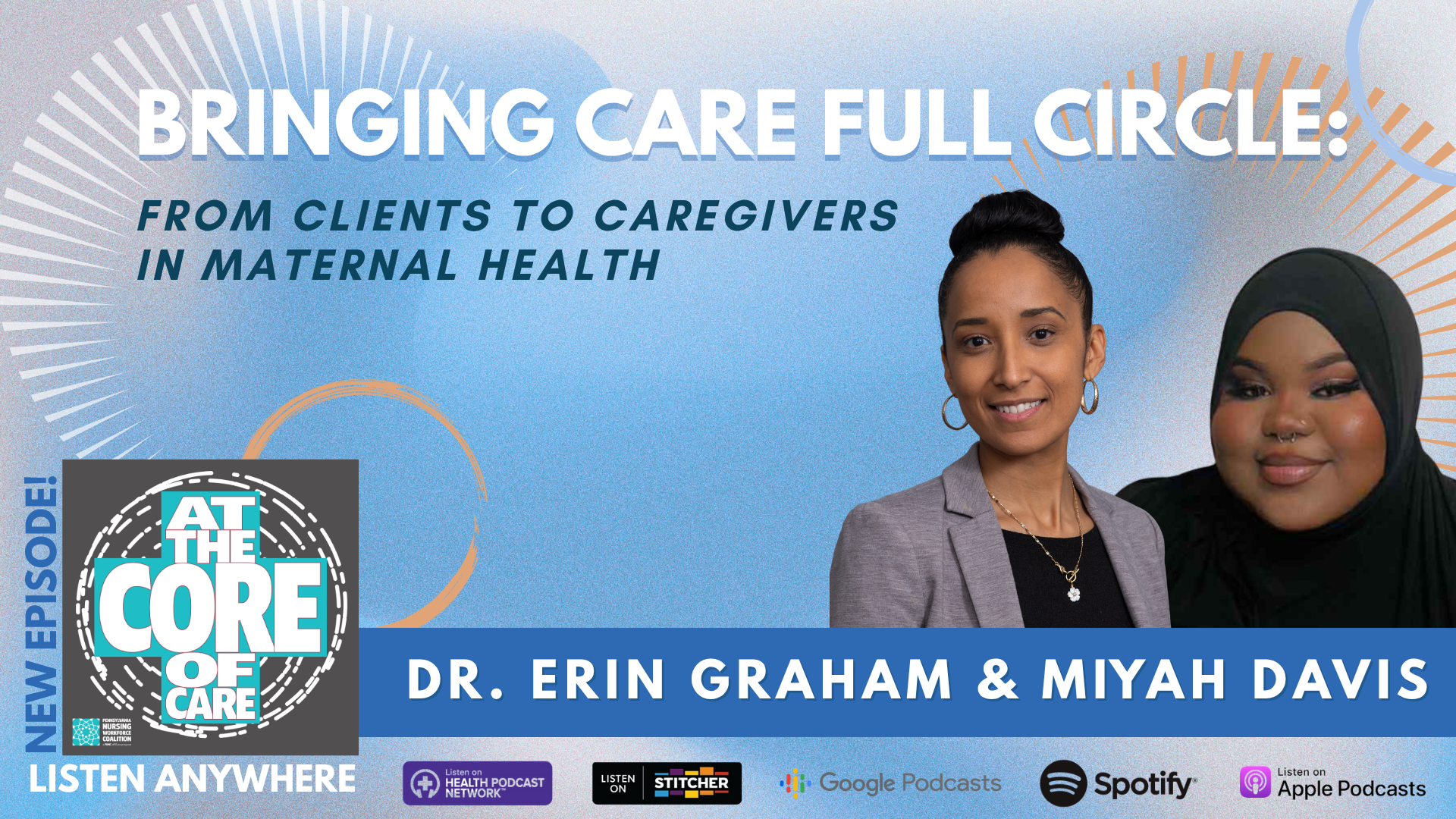
Take some time to listen to At the Core of Care's two-part series about moving from clients to caregivers in maternal health.
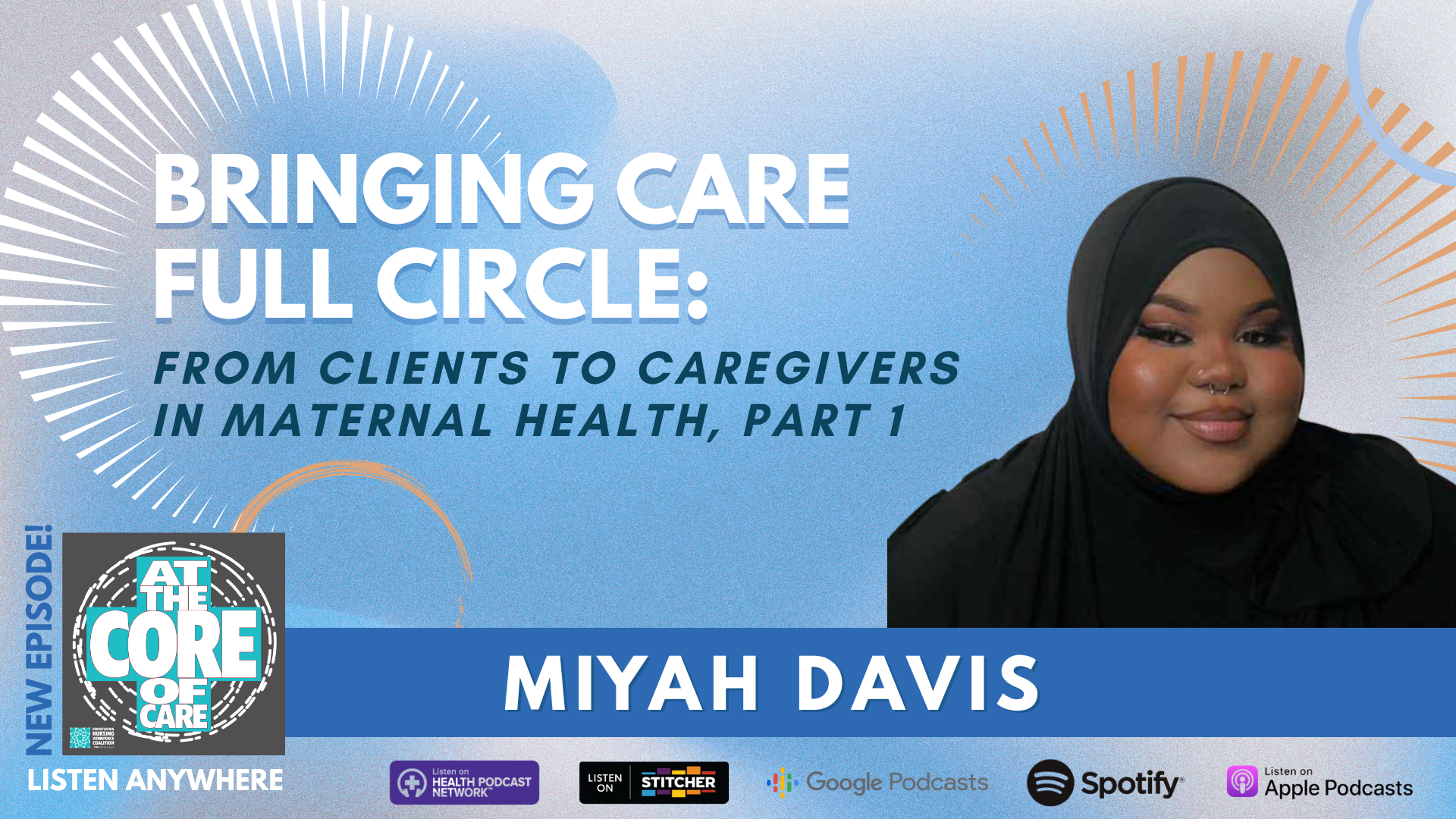
Part One

In this first installment of our special maternal health series we sit down with Miyah Davis, who shares her inspiring path from being a client with the Philadelphia Nurse-Family Partnership to becoming a doula herself. She reflects on how her own pregnancy and birth experiences, including the support she received during times of housing instability, influenced her decision to help other parents feel heard and prepared. Hear how she balances her passion for birth work with full-time employment, motherhood, and the desire to be a consistent, empowering presence for her clients. She also discusses the importance of building trust, offering culturally responsive care, and expanding access to resources like lactation and birthing classes that help families thrive.
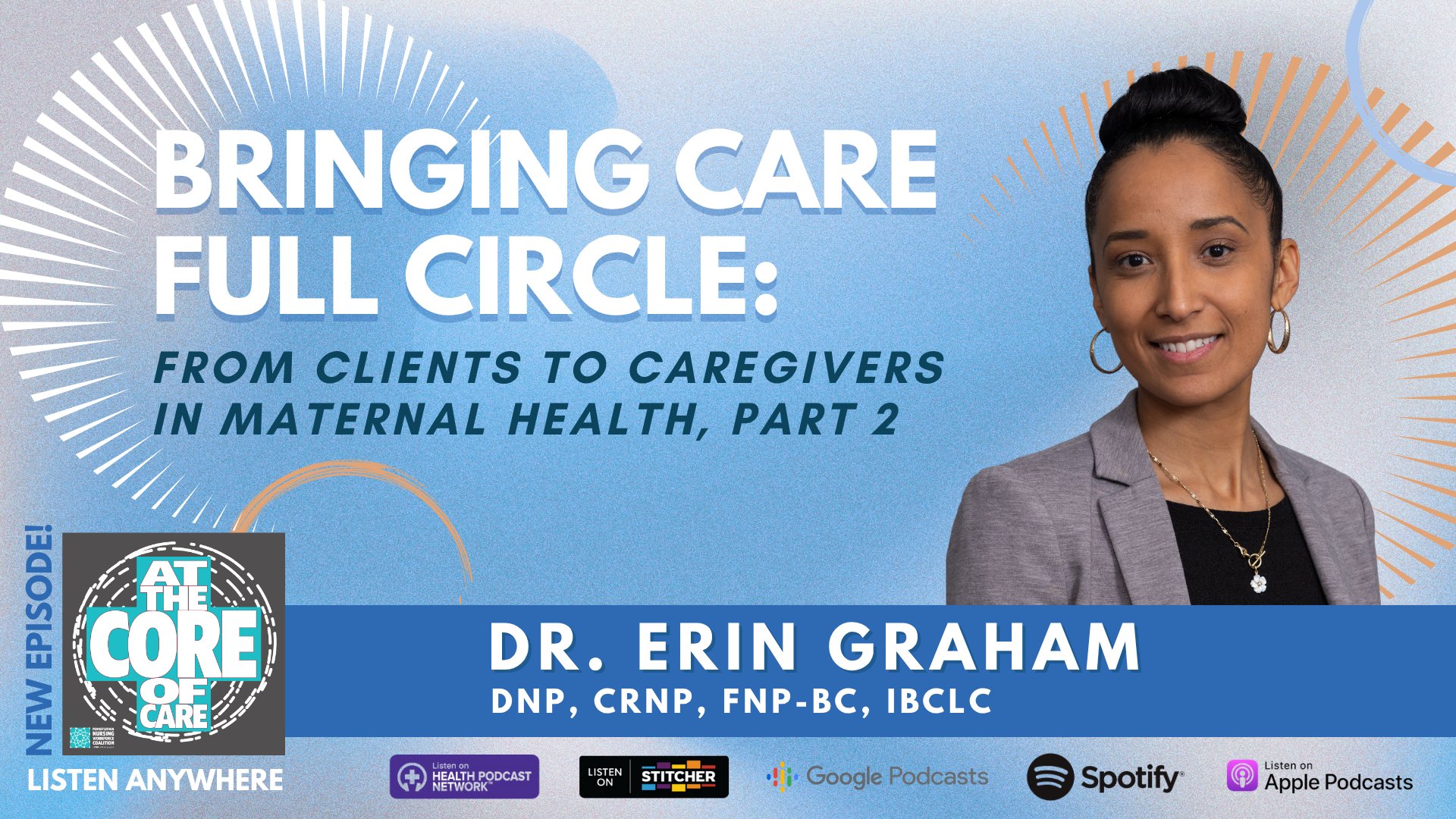
Part Two

In the second installment of our special maternal health series, we continue the conversation with Dr. Erin Graham, Deputy Executive Director at the National Nurse-Led Care Consortium. Erin shares how her public health background and deep ties to community nursing helped shape a doula training initiative that empowers former Nurse-Family Partnership clients to become doulas. We discuss how client feedback and nurse insight sparked a two-part approach: offering doula services and training former clients to provide culturally responsive care. Erin highlights the value of partnerships, the importance of workforce diversity, and how community-based efforts like this can improve maternal health outcomes and expand career opportunities.
Bringing Care Full Circle

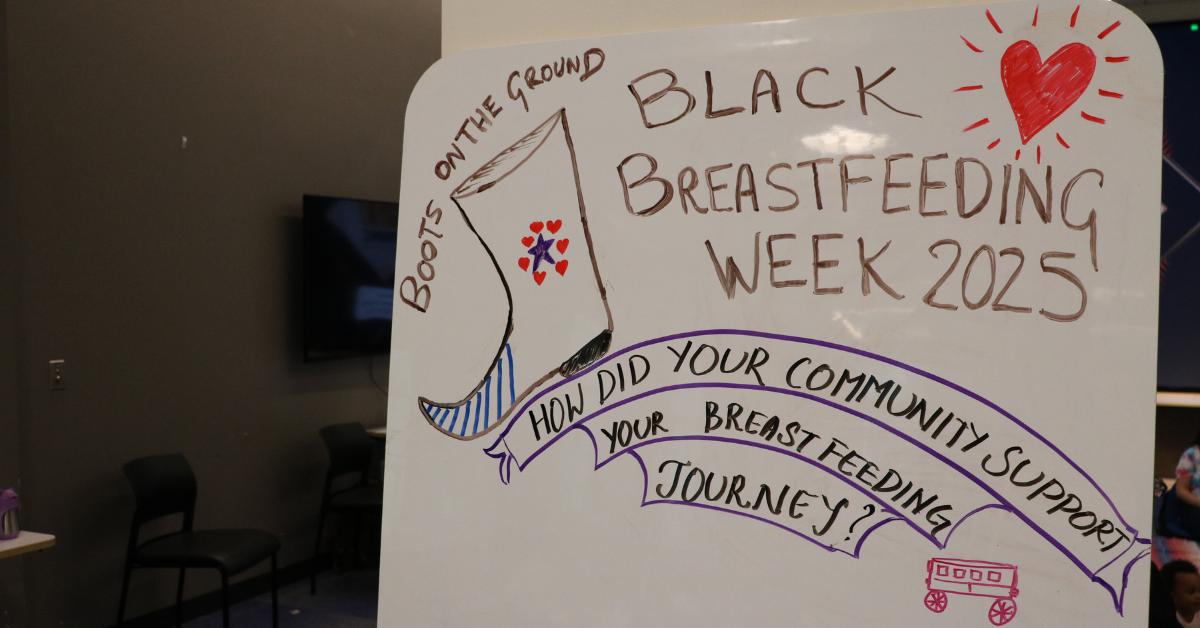
August 25-31 is Black Breastfeeding Week, as a part of August’s World Breastfeeding Month. At LATCH Cafe, we celebrated Black Breastfeeding with this year’s theme, Boots on the Ground: Rooted in Breastfeeding Success, Grounded in Community Support.
Black Breastfeeding Week started in 2012 in an effort to address racial disparities in breastfeeding. In a national survey conducted in 2015, researchers found that 83% of U.S. mothers breastfed, but when broken down by race, only 69% of Black women breastfed, compared to 85% of white women.. While this is true across the United States, the numbers vary based on location. For instance, in Philadelphia, research shows that 87% of white women initiated breastfeeding compared to 80% of Black women,.but by 8 weeks, only 59% of Black parents are breastfeeding, compared to 75% of white parents. The American Academy of Pediatrics recommends that infants receive only breastmilk until 6 months of age, and it is encouraged to keep breastfeeding until the child turns two years old.
There are a few reasons for these disparities, but it is impossible to discuss the reasons without recognizing the legacy of slavery. Generate Health writes that, “for the nearly 250 years that slavery endured in the United States, Black women and birthing people were regularly forced to provide breast milk to the infants of their slave owners.” Irth, a project that addresses health disparities, further explained that, “Black women in slavery were forced to stop nursing their own children to provide breast milk for the children of the slave owner… And since breastfeeding reduces fertility, slave owners forced Black women to stop breastfeeding early so that they could continue breeding, often to the detriment of their infants’ health. This stunted breastfeeding experience created a stunted mothering experience and the commodification of Black women as breeders and feeders.” These practices continued into the Reconstructive Era, and Black women were hired as wet nurses up to the 1940s.
In today’s world, Black women often report systemic barriers in their breastfeeding journey. Some of it involves a lack of family or community support. The negative association of breastfeeding and slavery is still impacting communities, and older generations still view breastfeeding as something they were forced to do against their autonomy, creating both a lack of support and negative cues. Employment is also a large barrier. Black women are over-represented in the service industry and have less access to both maternity leave and lactation support. In Philadelphia, 26% of Black women reported a return to work as their reason for not continuing to breastfeed, versus 10% of white women. Black women also overreport that healthcare professionals did not educate them about breastfeeding. Infant formula marketing targeted Black families and other families of color, and hospitals are twice as likely to provide formula to Black infants as to white infants.
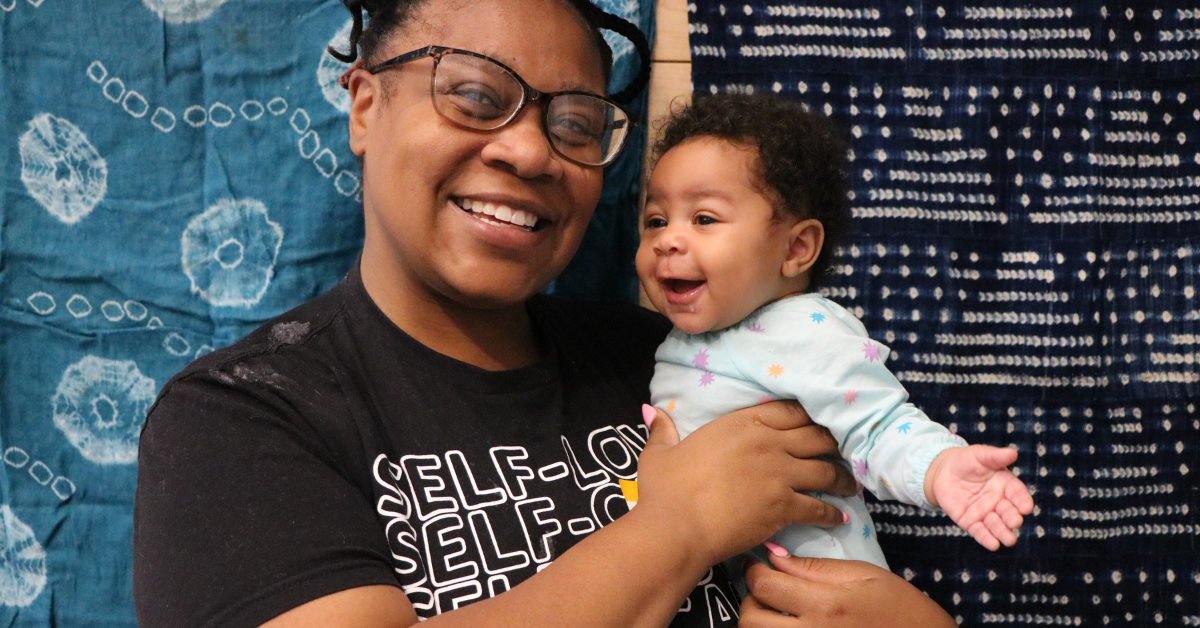
These systemic issues that cause the discrepancies in breastfeeding rates between Black women and their counterparts led to the creation of Black Breastfeeding Week. The LATCH Cafe and NNCC have participated in this week for many years, working with other members of our community to continue to promote and emphasize the importance of breastfeeding in our communities. This year, we spent time at the Cafe talking about how community, like LATCH, supports the breastfeeding journey. We had some great responses:
How did your community, like LATCH, support your breastfeeding journey?
Reminded me to step out to pump
Kept me company when I pumped
Reminded me, your body is enough. You are doing great.
Kept me going, saying don’t quit. Your body is supplying enough.
Provided conversations with other breastfeeding mothers.
Our discussion at LATCH Cafe, in addition to the responses noted above, highlighted how many people currently experience being the first (in generations) to nurse their babies in their family and community, and thus had to serve as the person educating the very people who were their potential support system. We acknowledged how changing the perception of breastfeeding in communities that have been impacted by historical and current systemic racism means continuing to share stories, latch babies even when no one understands the “what” or “why” of it, and trust that slowly this will have ripple effects throughout family and friends and future generations.
LATCH Cafe is so grateful to have our “boots on the ground” in Philadelphia. We love facilitating connections between parents, community supporters, family members, and anyone who has a passion and interest in lactation and feeding babies. Happy Black Breastfeeding Week 2025!

Originally published by the National WIC Association on October 24.
Today, 44 national organizations have signed on to a letter led by the National WIC Association (NWA) urging the White House to provide an additional $300 million in emergency funds for WIC.
This critical funding would sustain program operations through the first two weeks of November and prevent millions of families from losing access to essential WIC services as soon as November 1. Last week, state WIC programs received temporary emergency funds from the White House to stabilize the program through October 31 during the ongoing federal government shutdown. However, that funding is rapidly depleting, and numerous states are projected to exhaust their resources for WIC benefits as early as next month. The letter underscores the severe consequences that women, infants, and young children will face if funding is not secured. The diverse coalition, which includes representatives from the nonprofit, dairy, and retail sectors, emphasizes that this crisis is preventable.
“These disruptions for families can be prevented by releasing additional funding to WIC. With no end in sight for this government shutdown, the White House must act to ensure that families and children do not become casualties of congressional inaction,” the letter states. On behalf of the 44 undersigned national organizations, we urge you to provide additional funds to the Special Supplemental Nutrition Program for Women, Infants, and Children (WIC) during this time of uncertainty. Even with last week’s funds from the White House to stabilize the program, numerous states are projected to exhaust their resources for WIC benefits as early as November 1. We request that the White House provides an additional $300 million in emergency funding to WIC to continue operating in early November and avoid major disruptions on November 1 for women, infants, and young children.
WIC is the nation’s premier preventive public health nutrition program, supporting nearly 7 million low-income mothers and young children who have or are at risk for developing nutrition-related diseases and disorders. WIC benefits are not only critical nutritious food, but families also benefit from nutrition education, breastfeeding education and support, and referrals to medical and social services. While we know WIC has historically remained open for business during government shutdowns, the timing of this shutdown at the beginning of a fiscal year has significantly limited the federal funding options available to states. While we thank the White House for temporarily sustaining WIC for the month of October, it’s imperative that you provide additional funding by early the week of October 27 to avoid major disruptions to WIC beginning on November 1.
Without additional funding, some states may take steps to turn off WIC benefits and issue furlough notices to clinic staff the week of October 27. This means that families could lose access to infant formula, breastfeeding support, nutritious foods, healthcare screenings, and more beginning on November 1. These disruptions for families can be prevented by releasing additional funding to WIC. With no end in sight for this government shutdown, the White House must act to ensure that families and children do not become casualties of congressional inaction. Thank you for your time and for your continued commitment to protecting the health and well-being of families across the nation.
You can read the full article here.

Across the United States, 18.8 million children under age five are growing up in families where parental mental health deeply shapes early development (Children’s Defense Fund, 2023). While exact numbers are unknown, national survey data suggest that nearly one in five parents experiences a mental illness each year (Stambaugh et al., 2017). The emotional well-being of parents and young children is tightly connected—when one struggles, the other is affected. Parenting stress can trigger new mental health conditions or worsen existing ones, especially when families face additional social or economic hardship (U.S. Office of the Surgeon General, 2024).
Children exposed to substance use disorders (SUDs) or intimate partner violence (IPV) face especially high risks (U.S. Office of the Surgeon General, 2024; Lander et al., 2013). About one in four children in the U.S. lives with a parent who has an SUD, increasing their likelihood of developing behavioral or emotional problems (McCabe et al., 2025; Lander et al., 2013). Likewise, children who witness IPV are twice as likely to experience depression, anxiety, or conduct disorders (Kemal et al., 2023). Early childhood—when brain development and neuroplasticity are at their peak—is the most effective time to provide support that can change lifelong outcomes for both parents and children (Buka et al., 2022).
Yet, the systems designed to help often treat parents and children separately, even during the perinatal period. Many parents—especially mothers—face steep barriers to care: lack of childcare, paid leave, transportation, affordable healthcare, and stigma (Agterberg et al., 2020). Social stigma may stem from cultural beliefs, distrust of providers, or fear of judgment, and it can be magnified by challenges such as housing instability, IPV, or substance use (Misra et al., 2021).
On the provider side, access is limited by a nationwide shortage of mental health professionals. As of 2024, over one-third of Americans live in a Mental Health Professional Shortage Area, with rural regions especially underserved (HRSA National Center for Health Workforce Analysis, 2024). Licensing restrictions across states further hinder telehealth expansion. The lack of workforce diversity and ongoing stigma in many communities also deters minority families from seeking help (Misra et al., 2021).
Even when help is found, Medicaid billing rules can make early childhood mental health treatment nearly impossible. Fewer than half of U.S. states allow Medicaid to reimburse dyadic (parent–child) sessions, and only eight states recognize a parent’s mental health condition as justification for treating a young child (Smith et al., 2023). This leaves many families without access and limits providers’ ability to sustain services, despite high enrollment needs (Medicaid.gov, 2025).
To truly support children’s mental health, we must support their parents—through integrated family-based care, equitable reimbursement, and stronger community systems. The science is clear: early intervention works best when parents and children heal together.