Today, March 5th, is International Board Certified Lactation Consultants (IBCLCs) Day. This is a day that recognizes and celebrates the work, dedication, knowledge, and advocacy that IBCLCs bring to the birthing and medical community through their work and commitment to birthing, lactation, and postpartum care.
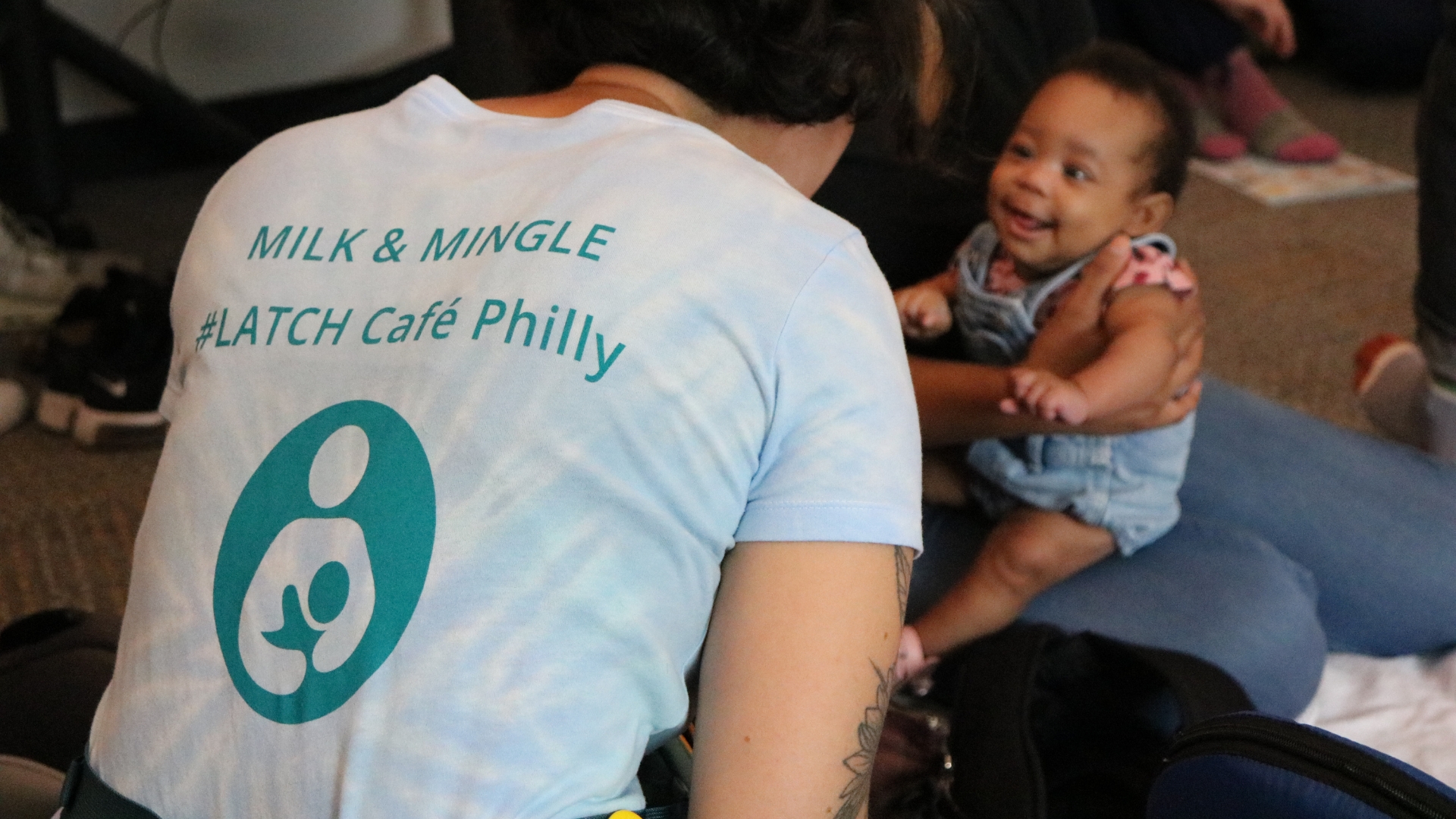
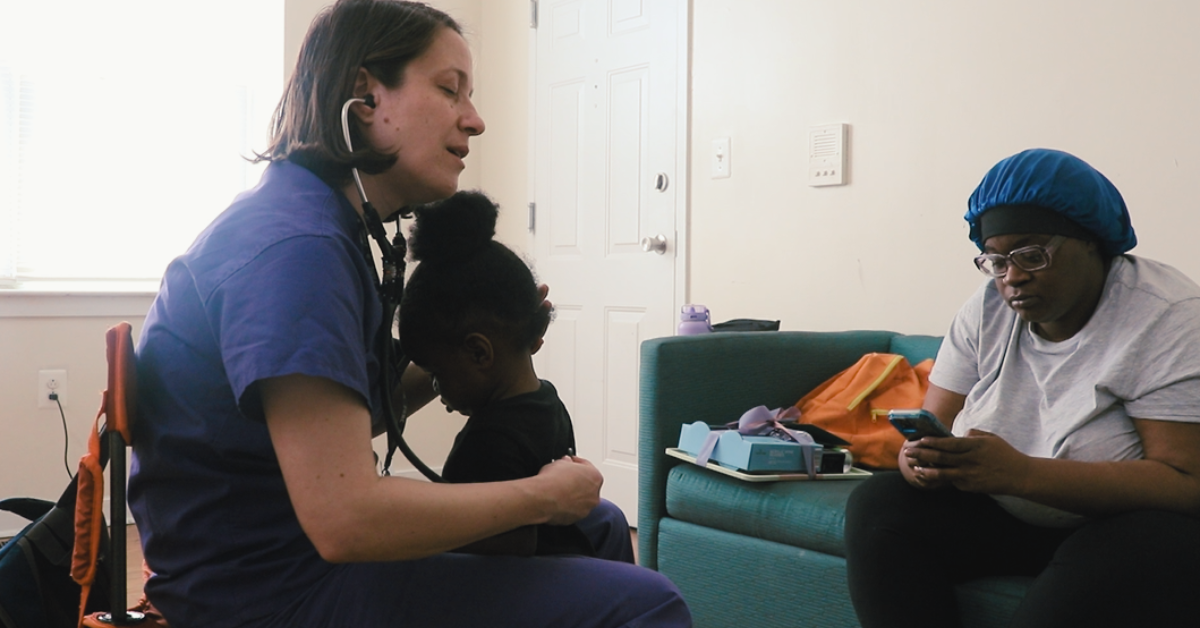
Here at NNCC, we have a history of having IBCLCs on our staff. Today, we have a total of 11 consultants on our team in nursing and supervisory roles. While ICBLCs can be found in health centers, offices, birth centers, and support groups, at NNCC, our IBCLCs use their expertise during home visits and at the LATCH Cafe. Katy Baker-Cohen, Nurse-Family Partnership Nurse Home Visitor and Lead Lactation Specialist, shared some insight into her role as an IBCLC and how it impacts her job.
There are three pathways you can take to become an IBCLC. At NNCC, most people get their required hours through the work that we do as nurse home visitors as well as mentorships with other IBCLCs already within NNCC. For myself, one of my supervisors was an IBCLC. So while I can’t pinpoint when I learned about being a lactation consultant specifically, I knew that my supervisor was doing a lot of work in lactation. I jumped at the chance to participate in it and learn more, because I knew that I wanted to delve into the way I could support initial bonding, nutrition, and support for a new parent. I was excited to grow in my nursing and professional career.
NFP nurses are partnered with a client from 28 weeks pregnant to 2 years of age. As part of this program, these nurses walk with their families through the different stages of their child’s life. Naturally, lactation is a part of that. As an IBCLC, I am trained to be supportive of baby feeding in all aspects, whether it’s breast/chestfeeding or formula feeding. I work hard to keep them safe. And then I walk them through introducing solids and weaning - covering everything about baby feeding. It is really helpful to have this training on the biological and developmental feeding support.
But even larger than myself, it is helpful to have other IBCLCs on staff. We started an in-house lactation support for nurses so that we can support the different problems that arise with any of their clients. Having this robust IBCLC staff allows us to do things like LATCH Cafe and create a highly informed space for people to learn about lactation from people who have this additional knowledge.
I would love to continue to see lactation consultants as a valued part of the healthcare system. In the medical field, there are special needs in all areas, but there is a lack of lactation training in general. We would like to be looked at as the experts of lactation, but overall, there should also be more training in the medical field.
Also, I would love for people in general to recognize the importance of bonding and physical development through feeding. Feeding is such a biologically important thing that touches on so many development steps that a baby needs to go through. Being a support to home visiting programs, like NNCC, helps us meet the goal of our programs.

It is estimated, based on data provided by the Energy Information Administration, that 34 million US households, or 27%, were deemed energy insecure. Energy insecurity is defined as, “the inability to adequately meet basic household energy needs… energy refers to electricity, gas, or other power sources used for lighting, cooling, heating, and the use of household appliances and electronic devices.”
Here at NNCC, we pay close attention to energy and utility needs, recognizing them as a public health need. Households that face energy insecurity are often forced to make difficult decisions on where they spend their finances, and utilities are often at the bottom of the list. Affordable utilities are essential to maintaining basic health and safety, and federal law does not recognize a right to utility services, except for an obligation to pay. That leaves utility laws to be regulated at the state and municipal level. Pennsylvania enacted its own utility regulation through Chapter 14 in 2004, and it is reauthorized every 10 years. Another reauthorization is coming this year, people are taking a further look into Chapter 14 and its impact on their communities. We explore that and more below.
The Responsible Utility Consumer Protection Act, codified as Chapter 14 of the Public Utility Code, is a Pennsylvania statute that establishes standards for utility billing, collection, and service termination practices for companies under the jurisdiction of the state's Public Utility Commission (PUC). Enacted in 2004, its stated purpose was to equip utility providers with mechanisms to discourage customers who can afford to pay their bills from neglecting to do so, thereby preventing uncollectible debt write-offs that could inequitably drive up costs for responsible, bill-paying customers.
However, in practice, Chapter 14 has precipitated a surge in utility service terminations affecting low-income consumers. For low-income households, non-payment is often not a matter of neglect, but rather a consequence of unaffordable utility rates and a lack of access to assistance programs and resources that could alleviate their financial burdens. Consequently, Chapter 14 has had the unintended effect of exacerbating energy insecurity and hardship for some of the state's most vulnerable residents, undermining its stated objectives of promoting consumer responsibility and equity.
Since Chapter 14 has been implemented:
Shown in a House Consumer Protection, Technology, and Utilities Committee testimony, these punitive rules and regulations disproportionally affect Pennsylvania’s low-income households, who already face compounding stressors that threaten their ability to maintain stable housing.
Chapter 14 of the Public Utility Code is set to expire at the end of 2024 and is currently up for reauthorization. Two bills in the Pennsylvania General Assembly aim to reauthorize Chapter 14: Senate Bill 1017, and House Bill 1077.
The following are policy improvements necessary to help medically vulnerable and low-to-moderate-income families remain connected to life-essential services:
Utilities impact the health of many families, as they are a basic necessity but not a right protected under federal law. States like Pennsylvania have attempted to address the issue through legislation like Chapter 14, but too often policies have unintended consequences that can remain entrenched in systems for decades. Poorly designed policies jeopardize access to essential utilities, residential stability, and health for medically vulnerable consumers. The public health impact of utility laws is felt in communities across the nation, and healthcare advocates like nurses have an important voice in highlighting the importance of health, well-being, and economic security for all.
Helpful Links:
https://www.legis.state.pa.us/cfdocs/legis/home/findyourlegislator/
https://www.stfm.org/about/advocacy/tipsforcommunicatingwithlegislators/#5980

In 1978, the US completely banned the consumer use of lead paint, which was used in many residential homes at the time. Lead paint was so widespread because it was more durable and had faster dry times, but the health risks were too great to ignore. Exposure to and ingestion of lead can seriously affect a child’s physical and mental development, with well-documented symptoms including damage to the brain and nervous system, slowed growth and development, learning and behavior problems, and hearing and speech problems. These health effects are significantly more harmful to children younger than six years old, as their bodies are rapidly developing and they tend to get their hands on anything and everything.
Several risk factors impact the increased risk of lead exposure in an area, including:
higher number of low-income households
housing that was built before 1978
other risk factors linked to institutional policies
A CDC report from 2013 found that Black children had over two times the average blood lead levels found in white children. Institutional racial policies are at work. The report stated that “low housing quality, dangerous environmental conditions, poor nutrition, and other factors were all cited as reasons for increased lead poisoning risk — and unfortunately, many of these factors are the direct result of institutional policies that negatively affect Black communities.”
National Nurse-Led Care Consortium has a long commitment to addressing the safety of families' lived environments, and is a part of the Lead-Free Promise Project coalition. Based in Pennsylvania, this project reports that nearly 7,000 children in PA are poisoned every year. Black and Hispanic children in Pennsylvania are disproportionality impacted, “because they are more likely to live in older properties with deteriorated lead-based paint.” Because of all the risks involved, it’s important to be informed about how to take care of yourself and your family.
The Lead-Free Promise Project pushes for children to get tested twice for lead poisoning, at ages one and two. If a child has led poisoning, ensure that they are enrolled in Early Intervention. This governmental program connects families with services that supports their child’s needs.
Get lead out of the home! There are some ways that every family can reduce their exposure to lead, shown here. If you are still concerned about Lead, you can contact the National Lead Information Center, which can connect you with a professional to walk you through some of the possibilities to remove lead.
The most important thing is keeping you and your family healthy - learn more about lead today.

In October 2024, Pennsylvania Governor Shapiro signed into law H.B. 1608, which extends Medicaid coverage to doula services in the state. This includes providing childbirth education and support services, including physical and emotional support, during pregnancy, labor and delivery, and up to one year postpartum, as written by the PA Black Maternal Health Caucus. According to Birthing Advocacy Doula Trainings, 18 states and Washington, DC have already had Medicaid coverage for doula care, and Pennsylvania is one of 9 states in the process of implementing Medicaid coverage.
But there is a long history of at-home birth and pregnancy care. Midwives, who are trained healthcare providers today, have existed for centuries before the first recorded practice in the United States. According to the National Museum of African American History & Culture, experienced midwives were among the enslaved individuals who survived the middle passage, and continued to practice and train others. These midwives were vital members of the community, and many were allowed to travel long distances for their expertise which was uncommon for enslaved individuals - giving midwives the ability to maintain community connections that were often lost when families were split apart.
After the Emancipation Proclamation, these midwives continued their practices, often in rural communities and the South, where access to medical centers was rare. Midwives were commonly the only and best choice of care during pregnancy and birth. These midwives were known as ‘Granny Midwives,’ and even when obstetrics became more common, Granny Midwives continued to be a staple in Black communities.
Through the 1900s, the birthing process continued to be medicalized, and although obstetrics was initially shunned by the medical community, privatized healthcare and the government stepped in with policies. Uché Blackstock, an emergency physician and Founder of Advancing Health Equity, spoke on the violent policies of this time, saying that the Sheppard-Towner Maternity and Infancy Protection Act of 1921 was, “part of a campaign that essentially associated midwifery with poor outcomes, poor maternal outcomes, even though at the time there was no evidence for that… and so that medicalized the birthing process so that obstetrics and gynecologists and, at the time, mostly white men would be the ones that were caring for patients.”
The stereotypes perpetuated by the medical system against midwifery and the continued racist governmental interventions led to a decrease in midwifery. Data shows that “in 1940, there were 115,000 midwives and informally trained nurses, and as of February 2022, there are only 13,524 midwives.” During this time of medicalization, the emphasis on the emotional support that midwives provided dwindled. In the 1970s, the term doula was introduced, giving new terminology for the long practice of women supporting women during childbirth. Doulas cannot provide medical help or advice but provide emotional support and coaching during pregnancy, labor, and postpartum.
Statistics show that having a midwife, a doula, or both, at a person’s side throughout their pregnancy journey positively impacts the process and birthing experience. The CDC data shows that “doula-assisted mothers were four times less likely to have a low birth weight (LBW) baby, two times less likely to experience a birth complication involving themselves or their baby, and significantly more likely to initiate breastfeeding.” And states that have a higher integration of midwifery were shown to have “significantly higher rates of spontaneous vaginal delivery, vaginal birth after cesarean, and breastfeeding, and significantly lower rates of cesarean, preterm birth, low birth weight infants, and neonatal deaths.”
While Pennsylvania is just beginning to extend Medicaid coverage to doula services, NNCC had the opportunity through the Jewish Healthcare Foundation to work alongside the Maternity Care Coalition and the Pettaway Pursuit Foundation to provide doula training for five nurse-home visiting clients and then doula services to clients in need. Programs like these provide culturally competent care and help “Black birthing individuals to navigate systemic racism experienced during the perinatal process.”

When most people think of holistic nursing care, they think of the “mind, body, spirit” model of care, and not necessarily of legal, transportation, and other social needs of patients. These needs are just as prevalent as physical health concerns in populations receiving community nursing care, and nurses who serve them are faced daily with clients who can’t attend health visits due to transportation, who can’t address their asthma because they can’t change their living conditions, or who have lost a job or housing opportunity due to discrimination.
The Family Advocacy and Integrated Resources Project (FAIR) supports nurses to refer home-visited families in Philadelphia for free legal counseling and complex case navigation. Additionally, the FAIR project can support families with emergency financial needs, such as a heater, replacement refrigerator, safe bed for their child, utility restoration fees, rent arrears, pest control, or transportation to medical and legal appointments.
In their usual line of work, nurses often find out about clients’ legal and case management needs, but are limited to a referral to community legal services, limited case management from a managed care organization, referrals to similarly overwhelmed social workers, or attempting to support families with case management or tangible resources themselves. The toll of trying to provide these additional resources contributes to nurse burnout. Nurses who feel personally responsible for attending to their clients’ many needs, who lack a sense of community, feel conflicting values, and are subject to work overload, are more prone to burnout.
Giving nurses an answer to those client needs they cannot attend to themselves gives them a sense of agency in what would otherwise be a recipe for moral distress. Moral distress is the internal conflict that arises when someone sees a problem that has a ‘right’ or moral solution but is unable to act due to a lack of knowledge or limitations on their resources or actions. Holistic care of the client gives nurses an answer to moral distress.
When a nurse is able to refer a client to free, trauma-informed legal services that can address their poor housing conditions, conflict with a landlord, discrimination at work or school, access to benefits, they are able to remove the burden of client needs that are outside their knowledge base and scope of practice, but which are necessary to the client’s health and well-being. When the nurse personally knows the provider of those services and can facilitate a warm introduction, where they can trust that the client’s needs will be met, it only increases the nurse’s ability to provide holistic care and reduces their risk of burnout. The FAIR project fulfills this need for multidisciplinary care for clients and reduces nurses’ moral distress.