• About
    • About Us
    • Nurse-Led Care
    • Anti-Racism Statement
    • Press
    • Staff
    • Board of Directors
    • Careers
    • News
    • Events
    • Contact Us
    • Donate
  • Programs
    • AmeriCorps Programs
    • Clinical Faculty and Preceptor Academy
    • Environmental Health Programs
    • FAIR Project
    • Keys to Quality Health Center Network
    • Mabel Morris Family Program
    • Medical-Legal Partnership
    • Nursing Practice and Transformation
    • Pennsylvania Nursing Workforce Coalition
    • Philadelphia Nurse-Family Partnership
    • Philly SPROUT
    • Philly-MontCo Family Center
    • Lactation Support Group
  • Advocacy
    • Public Health Nurse Home Visiting
    • Housing and Health
    • Increasing Equity for Under-Resourced Families
    • Supporting the Nursing Workforce
    • Improving Environmental Health
    • Expanding Access to Healthcare for All
    • Policy Blog
    • Full Practice Authority
  • News & Resources
    • News
    • Resource Library
    • Publications
    • News & Resources
  • Training
    • Upcoming Trainings
    • Nursing Continuing Professional Development
    • Technical Assistance Services
Subscribe
  • Careers
  • Careers
  • About
    • About Us
    • Nurse-Led Care
    • Anti-Racism Statement
    • Press
    • Staff
    • Board of Directors
    • Careers
    • News
    • Events
    • Contact Us
    • Donate
  • Programs
    • AmeriCorps Programs
    • Clinical Faculty and Preceptor Academy
    • Environmental Health Programs
    • FAIR Project
    • Keys to Quality Health Center Network
    • Mabel Morris Family Program
    • Medical-Legal Partnership
    • Nursing Practice and Transformation
    • Pennsylvania Nursing Workforce Coalition
    • Philadelphia Nurse-Family Partnership
    • Philly SPROUT
    • Philly-MontCo Family Center
    • Lactation Support Group
  • Advocacy
    • Public Health Nurse Home Visiting
    • Housing and Health
    • Increasing Equity for Under-Resourced Families
    • Supporting the Nursing Workforce
    • Improving Environmental Health
    • Expanding Access to Healthcare for All
    • Policy Blog
    • Full Practice Authority
  • News & Resources
    • News
    • Resource Library
    • Publications
    • News & Resources
  • Training
    • Upcoming Trainings
    • Nursing Continuing Professional Development
    • Technical Assistance Services
Subscribe

Partners in Health: A Topeka Case Study

Housing in Health, A Public Policy Blog from the National Nurse-Led Care Consortium

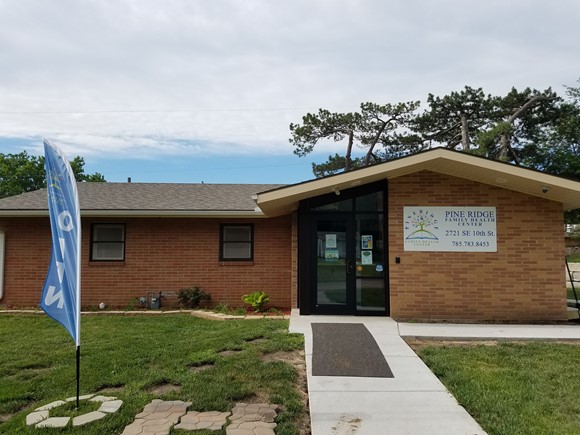
Photo of the Pine Ridge Family Health Center in Topeka, KansasContributors: Bianca Chun, Justin Gero, Emily Kane, Kevin Leacock

In Topeka, Kansas, residents of public housing have access to nurse-led care at the Pine Ridge Family Health Center. The clinic is the result of successful community partnership and the local housing authority not only listening to the needs of its residents, but taking action to address some of the biggest issues they faced. We recently spoke with Trey George, President and CEO of the Topeka Housing Authority (THA), and Mari Tucker, Partnership Liaison at Washburn University, about how a housing authority came to manage a health center. The health center is located in THA’s Pine Ridge Manor, and is run by the housing authority and its staff. Mari and Trey told us what it means to the public housing residents in their city and its impact on the community.

Thank you both for speaking with us today and agreeing to talk about THA and the Pine Ridge Family Health Center. Before we start, can you give us a brief background on you both and how you got involved with these programs?

Mari: I started at Washburn University five years ago as the Director of the Office of Sponsored Projects, so I was basically in charge of managing all the grants for the university has. Before coming to Washburn, my late husband and I owned a dental practice in western Kansas . The dental experience was a great insight into healthcare in general, especially in rural underserved areas. That background was really helpful. My position now is in the Washburn school of nursing.

Trey: Currently, I'm the President and CEO for THA, and have been with the housing authority for now about eight and a half years. Prior to that, as I jokingly say, I am a recovering banker - I worked in the banking industry for 16 years. And although I enjoyed that, this is definitely more of a calling for me.

Thank you both for sharing! It's interesting that you both come from different backgrounds. Did the partnership between THA and Washburn begin when you both started in your current positions?

Trey: The Pine Ridge Partnership was actually a creation that preceded us. Resident families expressed concern that that their kids were not arriving to kindergarten ready  - or in line with the rest of the students. So, in 2010 the housing authority donated the use of the community center to Parents as Teachers to help children prepare for kindgarten. They were only open a couple hours a day for two to three days per week during that first year, and they were just packed the entire time that they were there. Our families really needed and appreciated the education that was being provided there. So we asked, what more can we do? That’s when THA created “Pine Ridge Prep,” which is our early learning center preschool. Interestingly, we learned that although the preschool was successful and families loved the resources, there was still more work to be done to prepare kids for their education. If home was a broken place and they went home after a really great day at school, they were quickly going to unlearn all the amazing things they were being taught at the preschool. So we decided to try and address some of the other factors involved in family success.

That’s fascinating. So the health center is the result of THA progressively addressing the social determinants of health facing its residents, and it started with education and preschool.

Trey: Exactly.

Mari: And I would just say that the key to the success and continuation of Pine Ridge Prep and the health center is THA's willingness to set aside what could be rental property and use it for another purpose. Creating the Pine Ridge Prep, having the space for parents and grandparents, as Trey said, it's multi-generational, to try and break that cycle of poverty.

Why a health center, specifically? There must have been several projects THA could have pursued.

Mari: The Wellness Center was an outcropping of United Way community tours. Pine Ridge Prep was a stop on that United Way tour, and it just so happened that some faculty from the Washburn School of Nursing were on that tour and thought, wouldn't it be great if we could also offer some type of wellness checks (blood pressure, diabetes). Those kind of simple, non-invasive services could be offered onsite to improve the health of the community. It all grew from there!

Have Pine Ridge residents faced challenges in accessing care in the past? If so, what are some of those issues?

Mari: Transportation is a huge issue for all of the residents of public housing. Many residents don't have dependable cars. For someone living in Pine Ridge, it can be four or five bus stops and transfers to get to a medical provider. The Pine Ridge Family Health Center is the only known primary and urgent care clinic that's owned and operated by a housing authority. So, it's very easy access for the residents of Pine Ridge, it's right there. But, the Housing Authority also offers transportation to individuals living in Section 8 housing if they need help getting to the health center.

Trey: We have one of our residents, amazing young lady and mother of five, she's actually on our board now but she lives in Pine Ridge and I know it opened my eyes to her struggles with transportation. We knew transportation was a problem, but she would explain the process of getting all the kids up, getting everybody ready, getting everybody to the bus stop. Then, as Mari said, taking four or five bus transfers across town to get to see one provider for one of the kids. Imagine that process and cost of doing that with five kids - needing six bus passes every time. Now she can walk down the street and have those healthcare needs addressed. Having the health center really made a huge difference for her and her family being able to access affordable healthcare.

Can you tell us about the health center staff? What’s their relationship to the housing authority, and by extension the residents themselves?

Trey: It’s a really interesting model, in that the health center is 100% staffed by the housing authority. Which, actually, has worked out to be very much in our benefit. When one of our families comes in, they don't have to bring additional paperwork or anything with them to be able to prove their income, because our staff is there. One of the things we wanted to be really careful about is making sure people feel comfortable and have trust when they come into the health center, knowing that their medical information was going to be held confidential and not shared with anybody who didn't need to know. For example, if somebody comes into the health center and they talk about somebody else who is living in their home who maybe is not on the lease and that we are not aware of, although that is something they can technically be in trouble for, staff is not to share that information back with us, because that would very quickly defeat and undermine the reason that the health center is there. We want people to have access to high quality healthcare and not be afraid that what they share is going to cause them problems with their housing.

Mari: On the Washburn side, the health center serves as a clinical site for both the DNP and BSN students. The site is staffed by a full time nurse practitioner, a medical assistant, and a health services administrator, and provides services which include, urgent care for minor illness, care of chronic conditions, immunizations, school/sports physicals, and age appropriate health screenings, and more. The clinic serves as a clinical site for Washburn University nursing students and Washburn nursing faculty serves as volunteers for primary care services. Each semester, an average of 15 DNP and eight BSN students complete a clinical rotation in the clinic; many of the DNP students also complete doctoral projects directly linked to the clinic. It's a great experience for them, to understand treatment and healthcare for the underserved population.

It sounds like the health center is the culmination of a great community partnership.

Trey: The core partners are THA, Topeka Public Schools, United Way of Greater Topeka, and Washburn University. I would also be remiss if I didn't say our residents. Because if it wasn't for them, there would be no reason to have a partnership, there would be no reason to have the service that we have available.

Mari: One key person that we would be very remiss if we did not thank is Dr. Jennifer Harader. She is our consulting physician and Kansas is not a full scope of licensure practice state for DNPs, so it requires physician oversight. She generously donates her services in that role to us and has for the past two years. And, she is an Advisory Board member as well and provides a tremendous amount of insight. These partnerships make the health center a success and are key resources in the daily operation.

Thank you so much for talking with us!


LATEST BLOG POSTS

NNCC Applauds the Surgeon General for Declaring Firearm Violence as a Public Health Emergency

27 June 2024
Did you know that over half of US adults report that either they, or a family member, have experienced a...

Vaccine Education Strategies for the Long Haul

14 April 2023
 This is the fourth episode of our new Vaccine Confidence series on At the Core of Care. Over the course...


STAY CONNECTED TO NURSE-LED CARE


A Brief History of Housing Policy in the U.S.

The current American housing landscape was built over the last century. Understanding its history is essential to address the root causes of the most complex housing problems we face today.

The history of housing policy in the United States includes great achievements that helped millions find affordable housing and improve their dwellings, but it also includes a troubled legacy of racism and inequality that prevented millions more from benefiting from government programs. In many cases, racism and segregation were explicitly enshrined in law, and at other times they were merely accepted practice in implementing the law. We still see the effects of these decades-old decisions today. One of the biggest lessons we can learn from our housing history is that a fair housing policy must both acknowledge and address the history of racism and segregation in housing.

1934 - National Housing Act

The history of public housing in the United States largely begins in the 1930s during the Great Depression with the New Deal programs. Housing insecurity existed before, but the Depression provided the political impetus for the federal government to respond to an issue that had become a crisis. One of the first actions taken to address the nation’s growing housing crisis was the passage of the National Housing Act, which created the Federal Housing Administration (FHA) "to encourage improvements in housing standards and conditions."

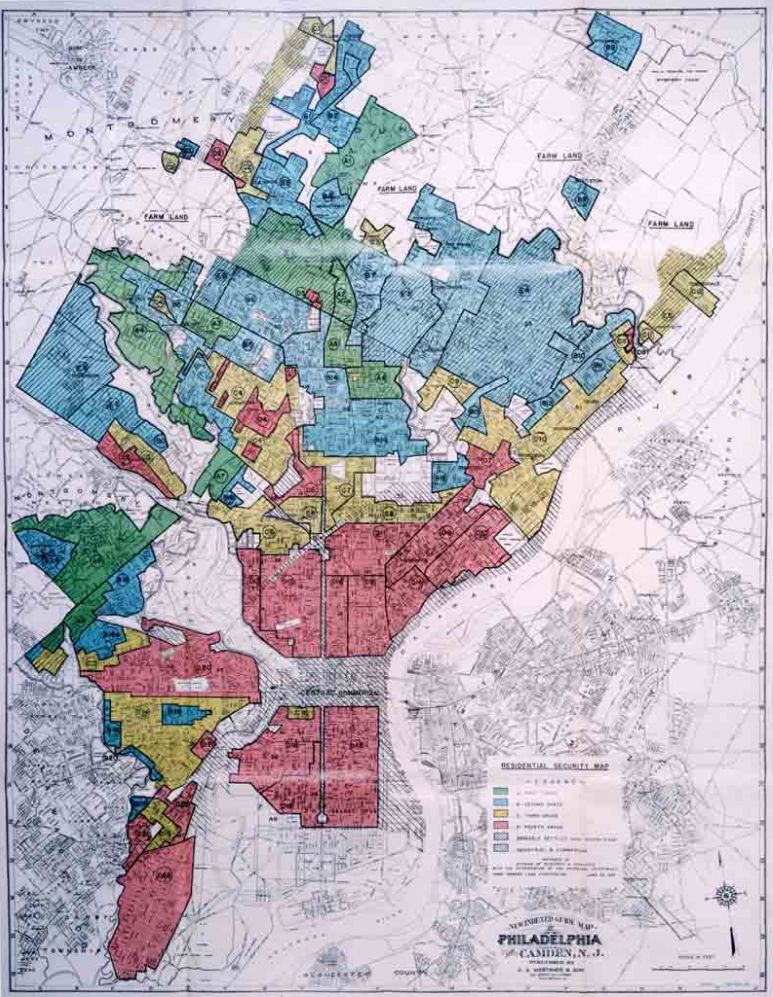
A 1939 report estimated that the FHA helps 12 million people improve their housing conditions, but that benefit was out of reach for millions more Americans. In his 2017 book, The Color of Law, author Richard Rothstein called the FHA a "state-sponsored system of discrimination" that was, "primarily designed to provide housing to white, middle-class, lower-middle-class families." The FHA refused to insure mortgages in African American neighborhoods, and required homes built by FHA loans to be sold only to white families, a policy known as redlining. Today, American cities continue to struggle with the inter-generational impact of redlining, segregated neighborhoods, and discriminatory lending practices.

1937 - United States Housing Act of 1937

The United States Housing Act of 1937 established the nation’s public housing system and stated: “It is hereby declared to be the policy of the United States to promote the general welfare of the Nation.” The most significant implication of the law was that it provided federal subsidies to local housing authorities around the country, “for the elimination of unsafe and unsanitary housing conditions, for the eradication of slums, for the provision of decent, safe, and sanitary dwellings for families of low income.” This model shifted the federal government away from construction projects and toward loans supporting local housing authorities and state governments. Public housing policy and administration have since changed, but the Housing Act of 1937 created the model we have today: federal dollars funding local housing authorities.

The Housing Act of 1937 was largely drafted by Catherine Bauer Wurster, a public housing and urban planning advocate, who became a Director at the newly formed United States Housing Authority. Alexander von Hoffman, Senior Fellow at the Joint Center for Housing Studies of Harvard University, wrote that the Roosevelt administration was not supportive of public housing. He reported in 2012 that, “perhaps the greatest lesson of public housing is that during a crisis determined activists can, with skill and luck, impose an unorthodox policy on a government that under ordinary circumstances would reject it.”

1944 - G.I. Bill

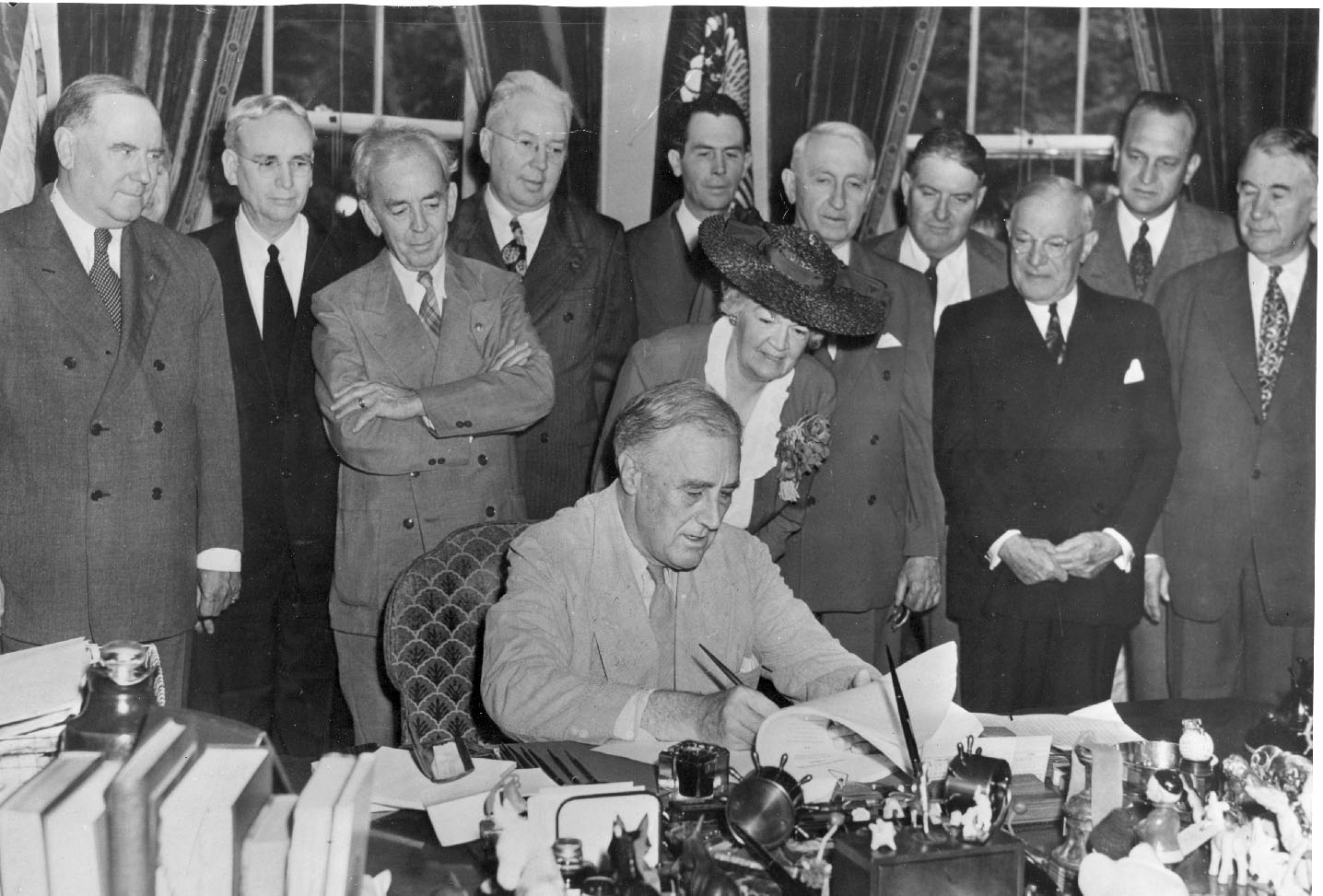
On June 22, 1944, President Roosevelt signed into law the Servicemen's Readjustment Act, commonly known as the G.I. Bill, which created programs to help veterans of the Second World War. Those programs included low-cost mortgages and low-interest loans. Between 1944 and 1950, the Veterans Administration guaranteed over 2 million home loans, but these benefits and more were denied to black veterans. The G.I. Bill was written to give enormous power to local officials, which in the words of Historian Ira Katznelson: “the law was deliberately designed to accommodate Jim Crow.” This discrimination and the denial of benefits to which black veterans were entitled by law happened in both the North and South. Journalist and author Edward Humes reported in 2006 that officials, “didn’t merely discourage black veterans. They just said no. No to home loans. No to job placement, except for the most menial positions. And no to college, except for historically black colleges, maintaining the sham of ‘separate but equal’...” It is another part of America’s complicated history. The G.I. Bill made home improvement and ownership possible for millions of veterans, but did so through an unjust system of institutional racism - demonstrating that merely investing money in housing alone is ineffective without also addressing underlying issues of racism and other social determinants of health.

1956 - Federal Aid Highway Act of 1956

In the minds of many, the ‘50s represent a time of American prosperity. A “post-war boom” saw the economy thrive throughout the decade, leading to increased homeownership and workforce productivity. It was in the midst of this boom that Congress passed an expansive piece of legislation that capitalized on America’s rapid growth through a major public works effort: the Federal Aid Highway Act of 1956. While seemingly unrelated to public housing, this law had a major impact on communities across the country. The bill authorized the construction of the Interstate Highway System, a 41,000 mile stretch of road designed to connect the country’s network of cities. In theory, the bill would propel America’s upward swing. In practice, highways displaced traditionally low-income communities, cutting them off from important resources. They also encouraged the proliferation of suburbs - areas where predominantly white, middle-class residents migrated from city neighborhoods, further isolating and segregating disenfranchised communities. Many highways also bulldozed over “blighted” areas, a term steeped in discriminatory practice.

1968 - Fair Housing Act (Civil Rights Act of 1968)

On April 4, 1968, President Lyndon B. Johnson signed The Civil Rights Act of 1968 into law. It came one week after the assassination of Dr. Martin Luther King Jr. King’s legacy and influence cannot be overstated: his years of tireless advocacy, coupled with nonviolent activism and community organizing, helped inform the provisions of the Act aimed at dismantling the systemic, racist policies that governed nearly all aspects of American life. Major achievements included the titles that dealt with housing - known collectively as the Fair Housing Act (FHA). Through the FHA, citizens are protected from discrimation when buying or renting a home, with special provisions for those seeking federally-assisted housing. Common practices like blockbusting - where real estate agents encouraged white homeowners to sell their homes to avoid incoming black residents - were outlawed. The FHA marked a turning point for housing policy in the United States, and helped shape the foundation and trajectory of the newly-formed U.S. Department of Housing and Urban Development (HUD).

1974 - Section 8 Amendment to the Housing Act

In 1974, Congress passed the Housing Choice Voucher Program, an amendment to Section 8 of the Housing Act of 1937. This created the Section 8 Program, which provides federal vouchers to low-income households to rent a home from a private landlord. Households pay about 30% of their income in rent, and the rest of the cost is covered by the federal voucher. Section 8 provides housing access to some of the people who need it the most and prevents homelessness, but it is a far from perfect program. In many areas of the country, families can wait years for approval for Section 8 housing assistance. Some local public housing agencies are no longer accepting applicants because their waiting lists are too long. Access is also limited because many landlords will not accept Section 8 vouchers. In 2017, NPR interviewed a Dallas mother who called hundreds of apartments in her search for a landlord who would accept Section 8 vouchers. Stories like this are not uncommon in areas with high demand for rental units. In many states, landlords are not required to accept vouchers, while in other states it is illegal to refuse to rent to a tenant because they have Section 8. Though this amendment was created to help the millions of individuals looking for suitable affordable housing, the program requires more changes to reduce and eliminate the discrimination Section 8 renters still face today.

1999 - Faircloth Amendment

The U.S. government has not funded the construction of any new public housing units in the last 20 years because of the Faircloth Amendment, which caps the number of public housing units allowable at their 1999 level. Since President Clinton signed the amendment, HUD can only replace existing units on a one-for-one basis, and is prohibited by law from building that would add more public housing units. The result is extra stress on a system that already cannot meet demand.

Public housing advocates have called this amendment “draconian,” and in 2017 Rep. Maxine Waters (D-MO) introduced a bill to repeal it. In March of this year, Anthony Scott, CEO of the Durham Housing Authority, testified on behalf of the Council of Large Public Housing Authorities to the U.S. House Committee on Appropriations. “This rule effectively and arbitrarily limits supply while making it difficult to increase the supply of affordable housing in local communities.” He described the Amendment as “unnecessarily” shackling local communities and preventing the development of new affordable housing. He concluded: “Simply put, the Faircloth Amendment needs to go.”

2012 - Rental Assistance Demonstration (RAD)

HUD’s Rental Assistance Demonstration (RAD) program illustrates how public housing has shifted since its creation in the early 20th century. Public housing today is subsidized in part through private and public partnerships (in what’s referred to as mixed-financed housing), largely because the demand for affordable housing has outpaced the federal government’s ability to pay for it. A 2010 study showed that HUD had a backlog of $26 million in unmet capital needs (including much-needed repairs and maintenance). RAD is an effort to curb this trend. In part, RAD allows public housing authorities to convert a portion of their traditional, project-based housing to project-based voucher (PBV) or project-based rental assistance (PBRA) units, giving housing authorities the ability to borrow private funds to repair those units. Yet an increased reliance on private investment may limit HUD’s accountability for those units converted under the program. Private investors and developers are not held to the same standard of public scrutiny as a federal agency like HUD. Expanding the private sector’s involvement in public housing meets a financial need, but it remains to be seen whether it is beneficial to residents in the long term.

 Emily Kane and Justin Gero contributed to this post. 


LATEST BLOG POSTS

NNCC Applauds the Surgeon General for Declaring Firearm Violence as a Public Health Emergency

27 June 2024
Did you know that over half of US adults report that either they, or a family member, have experienced a...

Vaccine Education Strategies for the Long Haul

14 April 2023
 This is the fourth episode of our new Vaccine Confidence series on At the Core of Care. Over the course...


STAY CONNECTED TO NURSE-LED CARE

  

Five Things You Need to Know About Climate Change and Public Housing

Housing in Health, A Public Policy Blog from the National Nurse-Led Care Consortium

As National Preparedness Month comes to a close, we’re focusing our Housing is Health blog on the link between housing and the effects of the climate crisis. Healthcare professionals can advocate for patients experiencing housing instability or hardship by providing personal preparedness guidance, continuity of care during natural disasters, and assistance with accessing community resources that support stable, affordable housing.

1. Natural disasters displace communities.

Natural disasters – like floods, hurricanes, and wildfires – can have wide-ranging, long-term structural and economic impacts. Hurricane Katrina, for example, demonstrated that disaster events can cripple communities and stifle recovery for decades to come. Although the community is still recovering, it was in the immediate aftermath of Katrina that residents of the Gulf Coast experienced the hurricane’s most devastating effects. According to a Brookings Institute report, over a million residents of the region were displaced by the storm, with some facing prolonged stays in motels, shelters, or temporary housing. Many residents were able to return to their homes within a few days, but those who already experienced socio-economic adversity faced seemingly insurmountable challenges. Home repairs were well outside many families’ financial resources, available housing shrunk, and already-compromised public housing buildings were destroyed. Low-income families impacted by Hurricane Katrina still struggle to regain what was lost. In the years since, we’ve seen this phenomenon with increasing frequency, in Puerto Rico, Texas, and the Southeastern U.S. Experts acknowledge that this trend will only worsen as climate change accelerates and aggravates natural disasters across the globe.

2. Climate-related heat waves disproportionately affect residents of public housing.

As global temperatures continue to rise, specific regions are facing more frequent and prolonged heat waves. The Centers for Disease Control and Prevention (CDC) reports that extreme heat kills over 600 people across the U.S. each year – a number that is expected to grow as the climate crisis worsens. Heat waves are especially dangerous for already vulnerable populations, like children, people with disabilities, and senior citizens. Despite this risk, and the over-representation of these populations in public housing, public housing authorities are not mandated to provide air conditioners to residents of federally-supported housing, or maintain utility costs associated with air conditioner use. The vast majority (75%) of residents of public housing have extremely low incomes, a barrier that not only limits access to air conditioning units, but restricts residents’ ability to financially manage ongoing utility costs. Some cities have launched programs aimed at addressing this disparity, like the New York City Public Housing Authority’s pilot project announced in the summer of 2019. Yet as heat waves become more commonplace in America’s largest cities, something as simple as air conditioning can tip the scales of survival for millions.

3. Low-income families can’t afford to avoid disasters.

In September of 2018, The Guardian reported that low-income residents of Flagstaff, Arizona are in the throes of “climate gentrification,” a term that is used to describe an increasingly common consequence of the climate crisis. As the effects of global warming (including more natural disasters and heat waves) are felt across the country, wealthier individuals residing in areas of greatest impact are able to relocate to relatively safe, risk-free areas (like Flagstaff). Low-income families with limited financial means are effectively “stuck” in disaster-prone neighborhoods, while the influx of wealth to relocation zones raises rent prices and property values. Like its original namesake, climate gentrification has a tendency to displace those already at increased socio-economic risk, including populations with a higher likelihood of adverse effects due to the climate crisis and related natural disasters.

4. The affordable housing crisis will worsen with climate change.

America is undergoing an affordable housing crisis. The problem is twofold: there is a shortage of available housing for low-income families, and the cost of housing across the U.S. has steadily outpaced wage growth. The effects of global warming are set to exacerbate this growing crisis, as individuals at or below the poverty line spend more and more on rent with less income to spare on emergency preparedness and recovery. As climate gentrification and climate-related migration accelerate, population changes will crowd and increase the price of areas already experiencing housing shortages. Without access to reliable, affordable housing, families have little recourse when faced with displacement or other adverse natural disaster outcomes. 

5. Current public housing infrastructure can’t withstand natural disasters.

While the majority of Americans receiving federal housing assistance utilize community-based rental subsidies (like the Housing Choice Voucher program), close to two million people still reside in traditional public housing developments. The U.S. Department of Housing and Urban Development (HUD) constructed most of today’s extant public housing complexes over forty years ago, with little (if any) consistent funding for upkeep and improvement. As a result, residents of traditional public housing are particularly susceptible to the damage caused by natural disasters. These vulnerable structures house populations at an increased risk for the climate crisis’ effects, including senior citizens and people with disabilities. An interdisciplinary approach will be necessary to mitigate ongoing effects of global warming, including renewed investment in our public housing infrastructure.

The climate crisis is creating new patient needs that will only worsen as time goes on. What can health centers do to support patients before and during natural disasters?

  • Build a robust emergency management plan that ensures continuity of care for all patients.
  • Incorporate personal preparedness resources as part of regular patient care.
  • Screen patients for housing instability and connect them to community resources.
  • Join advocacy efforts that support fair housing policies for low-income individuals and their families. 
  • Partner with local public housing authorities on joint preparedness efforts.


LATEST NEWS

NNCC Applauds the Surgeon General for Declaring Firearm Violence as a Public Health Emergency

27 June 2024
Did you know that over half of US adults report that either they, or a family member, have experienced a...

Vaccine Education Strategies for the Long Haul

14 April 2023
 This is the fourth episode of our new Vaccine Confidence series on At the Core of Care. Over the course...


STAY CONNECTED TO NURSE-LED CARE
  

Substance Use Disorders and Housing

Housing in Health, A Public Policy Blog from the National Nurse-Led Care Consortium

Introduction

Annual Report coverSubstance use disorders (SUDs) are illnesses  that affect a person’s brain and behavior, leading to the inability to control the use of a legal or illegal drug or medication. The scope and effects of SUDs are complex, but there is no mistaking the impact that they have on the population. Research has established that a person’s access to safe, affordable housing affects their health outcomes. For individuals with SUD, access may be inhibited by pervasive stigma, punitive laws and policies, and lack of appropriate resources. 

SUDs and the Housing Continuum

Criminalization and Stigma

Lack of stable housing causes stress that often leads to poor health outcomes, especially for those suffering from SUDs. There is an overrepresentation of mental illness and substance use within urban populations experiencing homelessness, with estimates of the prevalence of SUDs between 29-75%. Punitive responses to and criminalization of the behaviors of people who use drugs remain a significant factor in the housing issues people with SUDs face. State and local policies and programs shape housing, but mostly national policies dictate what happens to people with SUDs and their family members. Federal laws mandate that public housing authorities and owners establish policies that allow for the eviction of entire households if as few as one member is using illicit drugs (read full list of criteria: here). Other laws target people with SUDs, making it difficult for them to find a home. A current bill, H.R. 2179: Drug Testing for Welfare Recipients, would require individuals to pass a drug test before eligibility for Section 8 rental assistance and public housing. Federal regulations allow housing authorities to consider drug use and convictions of people and/or their family members when making decisions to evict or deny access to federally subsidized housing. Stigma against individuals with SUDs displays its negative effects through policy both federally and locally.

It’s certainly not about helping people with substance misuse problems — it is about stigmatizing.
Liz Schott, a senior fellow at the Center on Budget and Policy Priorities


Approaches to Housing and SUD

Individuals with SUDs can access free market rentals with housing subsidies (e.g., the Housing Choice Voucher Program), but there is little research to document success or discrimination in response to their efforts. To solve this problem, we need to frame this discussion around the continuum of care for people with SUDs, primarily focusing on the different types of housing opportunities and services available. It’s important to begin with a differentiation of the types of recovery: (b) Aspirational/Harm Reduction recovery – abstinence is not the current goal, but the individual can visualize that as a goal as some future point. These individuals still wish to reduce harm associated with the use of substances and improve other aspects of their lives. There isn’t a “one size fits all” solution for those struggling with SUDs. Communities must ensure that their recovery housing programs accept and serve people at all stages of recovery, including those still using alcohol and drugs.

Sober Living Housing (SLH)

SUDs involving alcohol and illicit drugs are strongly associated with homelessness, with prevalence sometimes exceeding 50% in community samples. There have been many approaches to assisting individuals experiencing homelessness with co-occurring SUDs. Abstinence-oriented recovery homes, also called sober living houses (SLHs), are an option for persons with substance use problems hoping to abstain from substances on their program of recovery. SLHs are promoted as places to send clients to live after they complete residential treatment. SLHs are considered housing that fits in with single/multi-family neighborhoods and mixed-use residential-commercial areas. Recent research indicates that there have been favorable outcomes for individuals involved in this model, but there are significant limitations. One of the major limitations stems from the requirement for individuals to remain abstinent, which some people are unable to do. SLHs can provide a supportive environment for people in recovery, but as in traditional public housing, if residents can’t demonstrate their continued sobriety, they can be evicted. Meeting individuals where they are and working through their process is an important step in housing people with substance use problems.

Housing First

Housing First uses a harm reduction approach, which focuses on reducing harm caused by the individual’s substance use and behavioral health issues. Immediate access to free or subsidized housing without requiring transitional steps or demonstrated sobriety is a main tenet of this philosophy. The United States Department of Housing and Urban Development (HUD) has begun to shift its approach to center around Housing First, as evidenced by its Continuum of Care (CoC) Program. There has been a demonstrated need for this low-demand approach, and the results have been promising. Reviews of the research on Housing First have indicated that when people experiencing homelessness are able to access free or subsidized apartments they are prone to stay in those locations for extended periods. Offering housing first and implementing case management services thereafter has spurred favorable outcomes for many individuals. Moreover, studies have demonstrated that people in the Housing First model with a serious mental illness, SUD, or co-occurring mental illness and SUD have demonstrated similar or better housing stability and recovery outcomes, compared to those placed in housing with pre-requisites like sobriety.

Looking Towards Solutions

The stigma faced by those people with SUDs is manifested through policies that further exacerbate their situation and, in turn, detract from recovery. This issue is systemic and demands a multi-faceted response. If you work in a health center, providing information about Housing First opportunities in your community to patients is critically important. Each individual has their own set of needs, and providing these potential avenues of support can be vital in their recovery. It is equally important to advocate for the rights of people with SUDs. There are efforts that intersect with this issue, such as Rep. Alexandria Ocasio-Cortez’s and Sen. Kamala Harris’ collaboration to fight housing discrimination. Groups such as Treatment Communities of America (TCA) have created reports outlining the data and advocacy necessary to eliminate the lack of stable housing for those suffering with SUDs. Housing is health, and there are many ways to achieve positive health outcomes for those with substance use related issues. In order to ensure those outcomes, the individual’s needs must be emphasized in policy through harm reduction strategies that are not punitive and free of stigma.

Diagnostic Criteria for Substance Use Disorders

  • Using in larger amounts or for longer than intended
  • Wanting to cut down/stop using, but not managing to
  • Spending a lot of time to get/use/recover from use
  • Craving
  • Inability to manage commitments due to use
  • Continuing to use, even when it causes problems in relationships
  • Giving up important activities because of use
  • Continuing to use, even when it puts you in danger
  • Continuing to use, even when physical or psychological problems may be made worse by use
  • Increasing tolerance
  • Withdrawal symptoms

Fewer than 2 symptoms = no disorder; 2-3 = mild disorder; 4-5 = moderate disorder; 6 or more = severe disorder.

Bianca Chun contributed to this post. 


LATEST BLOG POSTS

NNCC Applauds the Surgeon General for Declaring Firearm Violence as a Public Health Emergency

27 June 2024
Did you know that over half of US adults report that either they, or a family member, have experienced a...

Vaccine Education Strategies for the Long Haul

14 April 2023
 This is the fourth episode of our new Vaccine Confidence series on At the Core of Care. Over the course...


STAY CONNECTED TO NURSE-LED CARE


Lead Poisoning in Philadelphia

Housing in Health, A Public Policy Blog from the National Nurse-Led Care Consortium

Introduction

The harmful effects of lead on the human body has been well-chronicled and documented throughout history. Lead is a cumulative toxicant that irreversibly affects multiple body systems and makes its way into the blood, particularly affecting the development of the brain and nervous system as children grow into adolescence and adulthood. Once these high levels of exposure occur in children there is an increased chance of a reduction in IQ, behavioral changes such as reduced attention span, and increased antisocial behavior, among other health effects. There is no safe blood lead concentration for children, but the Center for Disease Control and Prevention has adopted an accepted blood lead level:

In May 2012, the CDC accepted the recommendation from the Advisory Committee on Lead Poisoning Prevention to eliminate the term “level of concern” and to begin using a reference value of 5 micrograms per deciliter based on the 97.5 percentile of the blood lead distribution among U.S. children.

Lead can be found in a variety of places (water, soil, air, gasoline, etc.), but the most endemic source of lead poisoning today remains lead paint present in public and private housing. Older housing structures (those built before 1978) that have lead-based paint continue to deteriorate over time, exposing young children to its harmful effects (mainly in the form of lead dust and paint chips that are ingested). There have been concerns about lead paint for decades. At the start of the 20th Century a Sherwin-Williams publication called white lead “a deadly cumulative poison.” Before that, Benjamin Franklin warned of the effects of lead poison in the human body in a 1786 letter – nearly 200 years before lead-based house paint was banned by the Consumer Product Safety Commission (CPSC).

Now, why is this still an issue for many children and families today if lead’s deleterious effects were reported so long ago? In his book Doubt is their Product: How Industry’s Assault on Science Threatens Your Health, David Michaels argues that though lead was regarded as a highly toxic chemical in the 1900s, it took some time before facts penetrated the minds and actions of government leaders. This delay was due in large part to the persistent messaging of paint production companies and PR agencies touting lead’s safety, a campaign not unlike the misinformation propagated by tobacco companies throughout the 20th century. It wasn’t until there was overwhelming evidence that lead affected industry workers and average Americans (including children) that the CPSC took action in 1978. Since this moment, there has been a significant decline in lead poisoning rates (nationally and statewide) among children through lead remediation efforts, education, and other interventions, but there remains a significant gap in outcomes for those living in low-income, disadvantaged areas.

Philadelphia as a Case Study

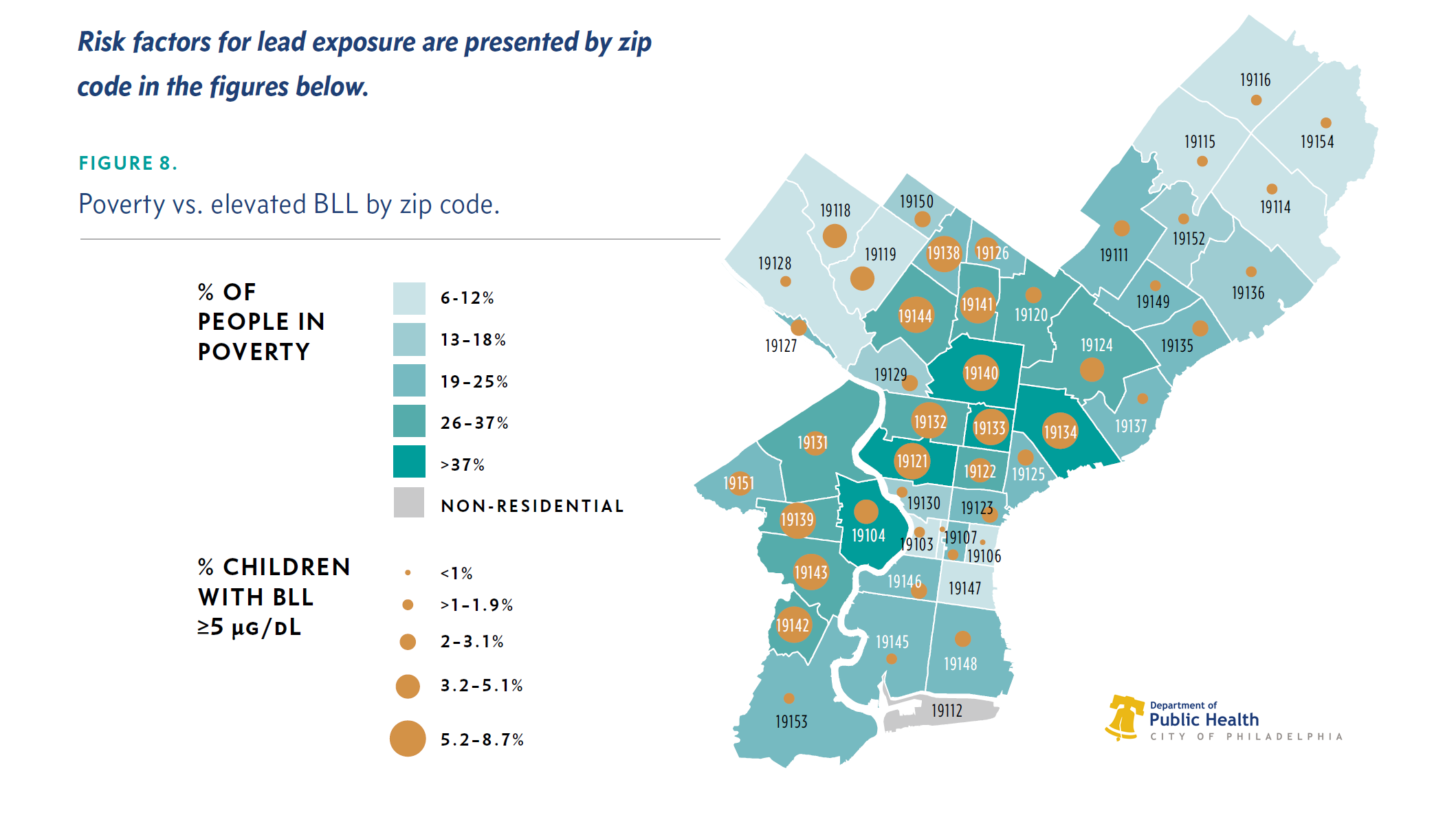
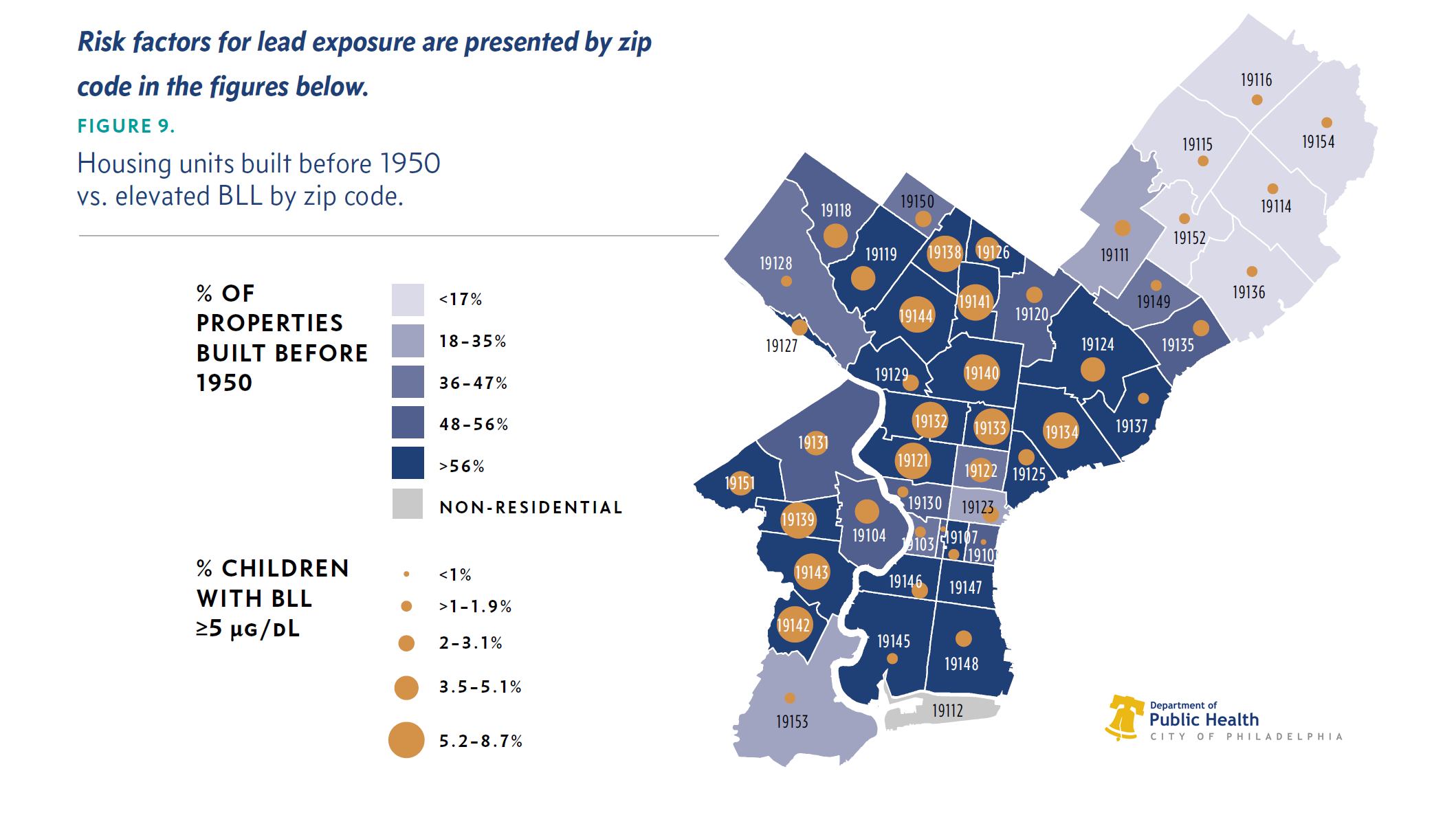
Despite the steps taken nationally and locally to curb the effects lead has on children and their families, the chart below illustrates the continued prevalence of negative health outcomes as a result of lead exposure.

In 2004, 12 percent of children tested in Philadelphia had levels of 10 or more micrograms per deciliter of lead in the blood; by 2014, that figure dropped to 1.7 percent. On its face, this looks and sounds like a success, but a closer look shows there are still communities hit hard by the effects of lead.

The national mean doesn't mean anything for a kid who lives in a place where the risks are much higher.
Dr. Helen Egger, chair of Child and Adolescent Psychiatry at NYU Langone Medical Center's Child Study Center

CDC describes children who are African-American, living in poverty, enrolled in Medicaid, and living in older housing as having the highest risk for lead exposure. This description is very apt when discussing Philadelphia, as this group, along with Hispanics, face lead exposure at disproportionate rates compared to Caucasians in the city. Approximately 85 to 92 percent of the city’s housing units were built before the 1978 federal ban on lead-based paint. Compared to the rest of the nation (where just over 50 percent of homes were built prior to that year), it becomes easier to see why this issue persists. Couple this with Philadelphia being the poorest big city in the country (with over 25 percent of people living in poverty and residing in deteriorated homes), and the picture becomes just a bit clearer.

Click to enlarge
Click to enlarge


The Changing Housing Landscape

In the city of Philadelphia, as in many U.S. cities, rental assistance is provided to low-income families to live in the private rental market through the Housing Choice Voucher Program, which is funded by the U.S. Department of Housing and Urban Development (HUD). This public housing decentralization trend is not only privatizing a formerly public system, but may be seen as an attempt to promote freedom of housing and to integrate lower-income and minority families into mainstream society. Voucher programs aim to move many residents of public housing from high-rise public housing structures to the private market, but do not necessarily address the concern that this segment of the population has already been exposed to significant levels of lead and continues to suffer its effects.  Moreover, there is no guarantee that voucher-based housing will be lead-free (as we’ll discuss later). Philadelphia has established laws and regulations to limit the effects of lead on vulnerable communities. Below, we’ll discuss why these safeguards have not sufficiently addressed this issue to date, and outline promising practices and models that can create meaningful change.   

Laws Currently in Place

There are laws currently in place in the city that have been largely effective in reducing lead poisoning over the years, but there are enforceable laws on the books that are not being enforced, leading to large swaths of children being affected at unacceptable rates. The city’s current lead paint disclosure law mandates that property owners ensure their constructed buildings that pre-date 1978 are certified as lead-safe if they are occupied by a child 6 years old or younger. Despite this mandate, many apartments and homes remain untested. Philadelphia has approximately 5,800 unexpired lead-safe certifications on file, but children 6 and younger reside in an estimated 22,000 rental properties throughout the city. This alone illustrates the shortfall of untested rental units that need to be certified lead-safe, with the enforcement of this law falling well short of its intended goal. There continues to be calls for the city to enforce the laws on the books to hold landlords accountable, but (i.e. having trouble reaching negligent landlords because of concealed identities through LLCs, lack of streamlined proactive process in inspecting high-risk neighborhoods, etc.). Because of this, last year City Council passed two pieces of legislation tied to lead safety that focused on negligent landlords.

Other City Models

Sam Magavern published an article in the International Journal of Environmental Research and Public Health, where he took readers on a deep dive of the housing stock in Buffalo and Rochester. These cities have had similar issues with poverty and old, deteriorated housing structures that are riddled with lead-based paint. Many of the solutions proposed in this article are relevant to Philadelphia, and some have already been implemented and have shown results. One that has been echoed by many in Philadelphia is the need for proactive housing inspections. This means not relying solely on complaint-based inspections as a strategy to protect residents of public and private housing from dilapidated, dangerous rental units that can expose children to lead, but adopting universal inspections across the board. Also, it would eliminate the fear that many residents of public housing have of complaining because they don’t want to be evicted for voicing their displeasure and concerns. As mentioned, in Philadelphia there are many who have advocated for this process to be mandated as law.

What would be even better was if we did proactive inspections of rental properties…So L&I [Philadelphia’s Department of Licenses and Inspections] would be going out to rental properties and inspecting for violations and making sure that they know that, when they go to issue that rental license, that that’s a safe house.
Colleen McCauley, Public Citizens for Children and Youth

In the past decade, Philadelphia has taken important steps to remediate the lead issue in all levels of housing (including public housing), but there is still much more work to do. For example, Philadelphia Department of Public Health’s Lead and Healthy Homes Program has implemented numerous initiatives to improve the health and safety of housing in the city. Even with this in place, there are still blindspots that need to be addressed as it relates to public housing in the city of Philadelphia. Below you will find some recommendations found on this topic that have been discussed here so far (and some that have not):

Recommendation Corner

Lead-based Paint Abatement: Full removal of lead-based paint regardless of whether or not there is a child 6 years old or younger living at residence. Resulting renovations may be costly upfront, but would be the most effective way to prevent long-term health effects for children. According to the EPA, professional lead-based paint removal would cost about $8 to $15 per square foot or about $9,600 to $30,000 for a 1,200- to 2,000-sq. ft. house. The average removal project costs about $10,000. Also as a frame of reference, in recent years Congress recently directed $170 million in aid to Flint. That's roughly 10 times the CDC's budget for assisting states with lead poisoning.

Universal testing/screening of blood-lead levels for all children: During the writing of this blog post, on June 5, 2019, the Mayor of Philadelphia signed this bill into law that requires providers to test the blood lead levels of the infants they are treating at least twice before the children are 30 months. Pediatricians recommend that children get a blood lead test at around the age of 1 year and again around the age of 2 years. Children who live in older housing or have other risk factors should be screened once a year until the age of six. While The Centers for Medicare and Medicaid Services (CMS) requires blood lead testing of all Medicaid enrolled children at 1-2 years of age or at 3 years of age (if not previously tested) this mandate covers all children no matter the insurance coverage. 

Lawsuits against paint companies: There has been a movement nationally to bring lawsuits against paint companies that knowingly used and sold toxic lead-based paint before the 1978 ban. A legal fight just ended in California after 18 years, and more legal action in other cities is a proposed method to aid in the high costs of cleaning up lead in the city.

Strengthen registry of licensed landlords: The City of Philadelphia License and Inspections has a property history database that shows the property manager’s permits, licenses, violations and appeals. This registry can be strengthened by taking the necessary steps to increase the number of registered licensed landlords and implementing a section for landlords to prove that their homes are lead-free and safe for occupancy.

Lead Court: A program spearheaded by the Lead and Healthy Homes Program to serve as a vehicle to help renters hold property owners accountable when the housing structure isn’t perceived to be up to code with lead mandates. There have been stories that show this program isn’t as helpful as it should be and needs to be fixed: Read here

 Bianca Chun contributed to this post. 


LATEST BLOG POSTS

NNCC Applauds the Surgeon General for Declaring Firearm Violence as a Public Health Emergency

27 June 2024
Did you know that over half of US adults report that either they, or a family member, have experienced a...

Vaccine Education Strategies for the Long Haul

14 April 2023
 This is the fourth episode of our new Vaccine Confidence series on At the Core of Care. Over the course...


STAY CONNECTED TO NURSE-LED CARE


Page 2 of 2

  • 1
  • 2
  • About Us
  • Nurse-Led Care
  • News
  • Events
  • Webinars
  • Contact Us
  • Privacy

The National Nurse-Led Care Consortium is a non-profit organization supporting and advocating for nurse-led care.

Business/Primary:
1500 Market Street
Philadelphia, PA 19102 

Mailing/Physical:
4601 Market Street
Philadelphia, PA 19139

Facebook icon Twitter icon LinkedIn icon Youtube icon Insta icon